
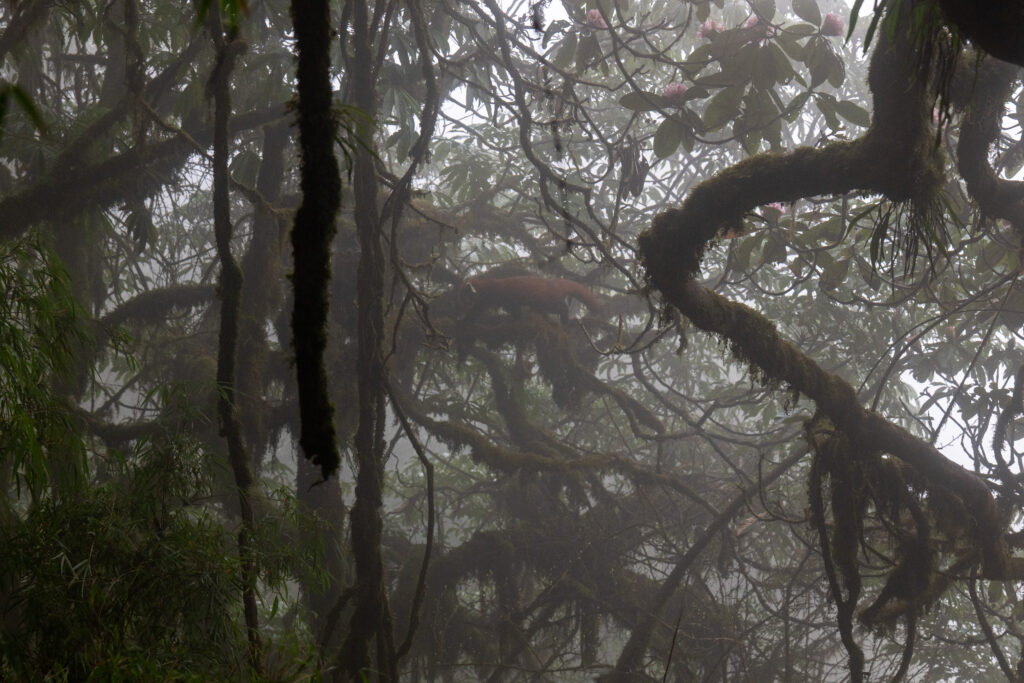
These photographs were taken in Darjeeling, northeastern India, from March 8 to March 12, 2025.
Trip
The main objective of this photo trip was to see the rare red panda, which lives in the rhododendron and bamboo forests of Singalila National Park in northeastern India along the border with Nepal. This part was a continuation of my attempt to see snow leopards in Ladakh. See: Snow Leopards of Ladakh – 2025.
I’m not sure why I really wanted to see a red panda in the wild, but of course, they look adorable as fairy tale characters with a stunning fiery red color and live in fantastic forests of bamboo, rhododendron, and banjh oak on the high Himalayan mountain slopes. That is quite something, and they are rare too, which makes it more of a thrill to see them. They are also called firefox.
Red Panda
The red panda is not closely related to the giant panda, or any other animal, but the closes species seems to be raccoons, weasels, and skunks, and is currently divided into two subspecies, the Himalayan and the Chinese. Unlike its more carnivorous relatives, it feeds mainly on bamboo shoots, so they are very dependent on them.
Sadly, they decline throughout their range as a result of the deforestation, agriculture, and hunting from the ever increasing human population, so now there are less than 10,000 left in the wild. To make matters worse, the two subspecies are probably two separate species, making each population even more important to protect. This is why Singalila National Park has become such an important location for the Himalayan red pandas. The forest and animals are protected there. That’s where I went.
Firefox Expeditions
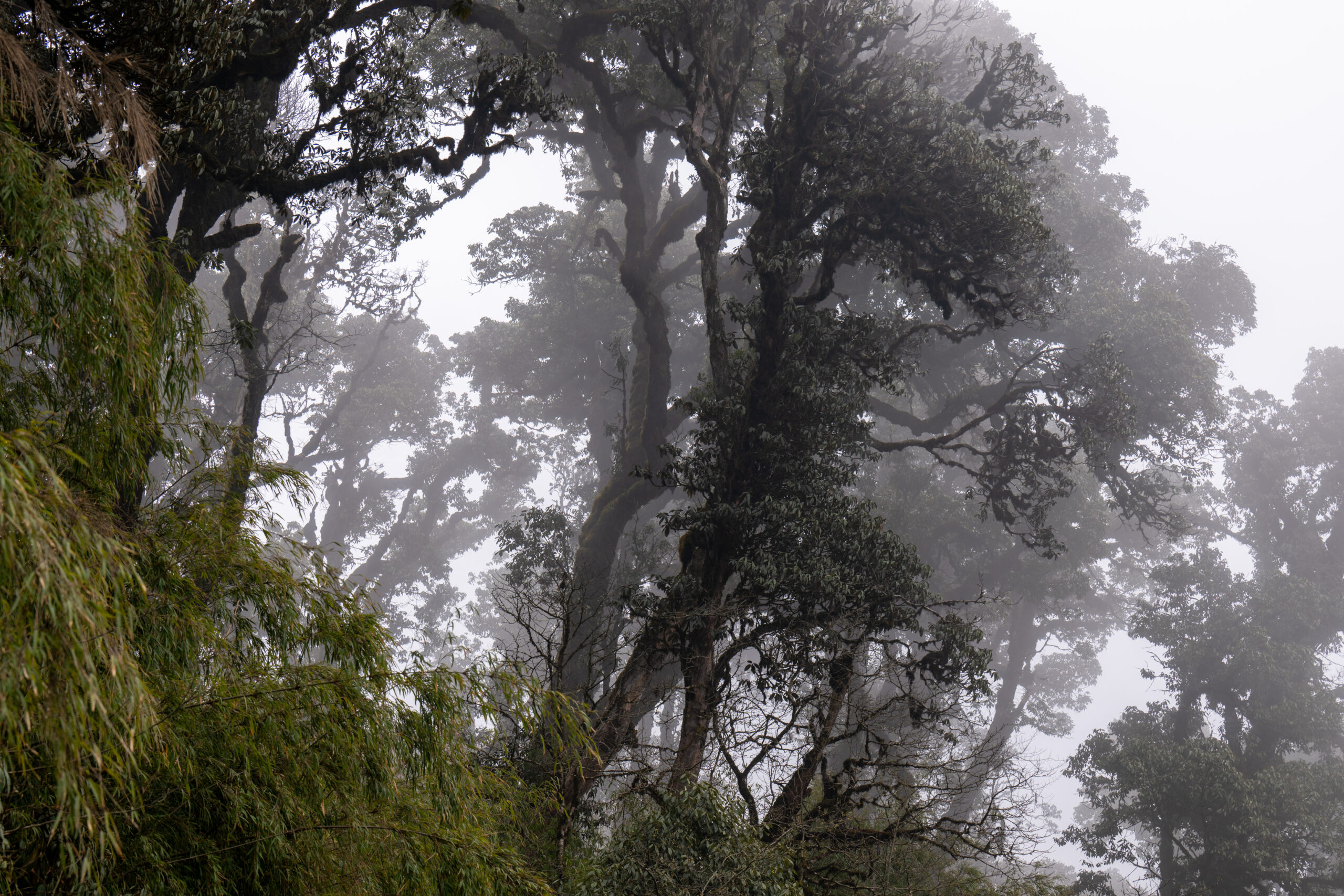
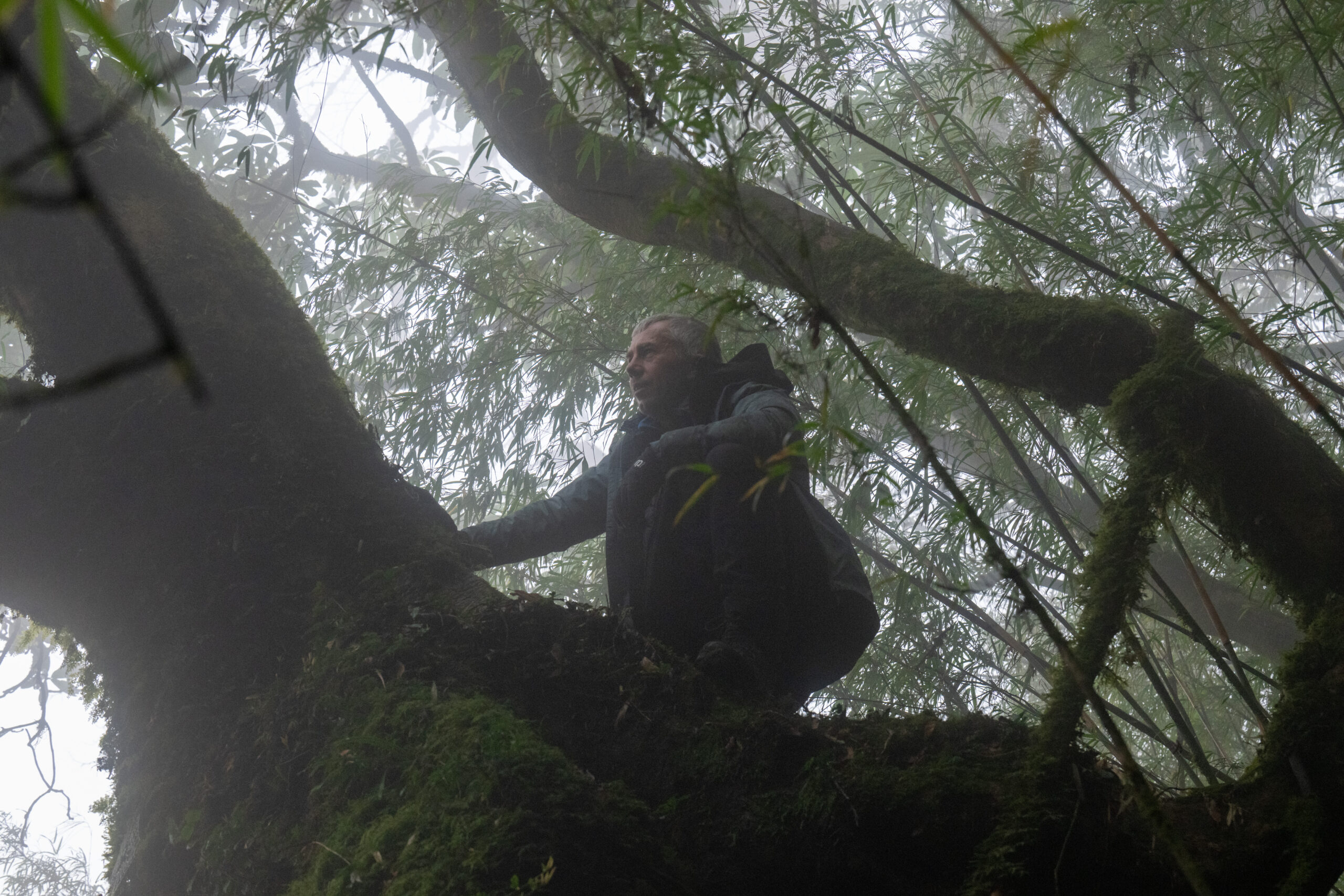
To just go to the national park and randomly look around in the forests would certainly be adventurous, but I’m quite sure I wouldn’t find a single one in a week then. These forests are extremely difficult to go through, with steep, muddy slopes and thick undergrowth of bamboo. It is quite cold too, as it is around 3000 meters above sea level, and we got thick mist, rain and even some hard hail. To find a red panda in that place requires skill.
That’s why I had several seasoned trackers to assist me, organized by wildlife photographer and nature enthusiast Sourav Mondal. Through their support I got several chances to photograph the red panda during my five full days in Singalila National Park. Actually, I got one or two sightings each day, often within ten meters, which may sound like an incredible amount of great opportunities to take perfect photos, but it was mostly the opposite. First of all, we wouldn’t spend more than around 20 minutes with any of them to avoid building up stress, and during that time, they would typically walk swiftly and high up in the branches, while bamboo and undergrowth kept catching the camera focus and ruining composition while the forest, thick mist, and cloudy skies made everything dark, hazy, and just gray. Instead of a relaxed session I got many desperate struggles to try to get the right angle while avoiding to stumble down a slope, not always successfully so.
Backlight, branches, darkness. The problem with photographing red pandas can be seen here, and these photos are some of the best ones from several days. So many had lost focus.
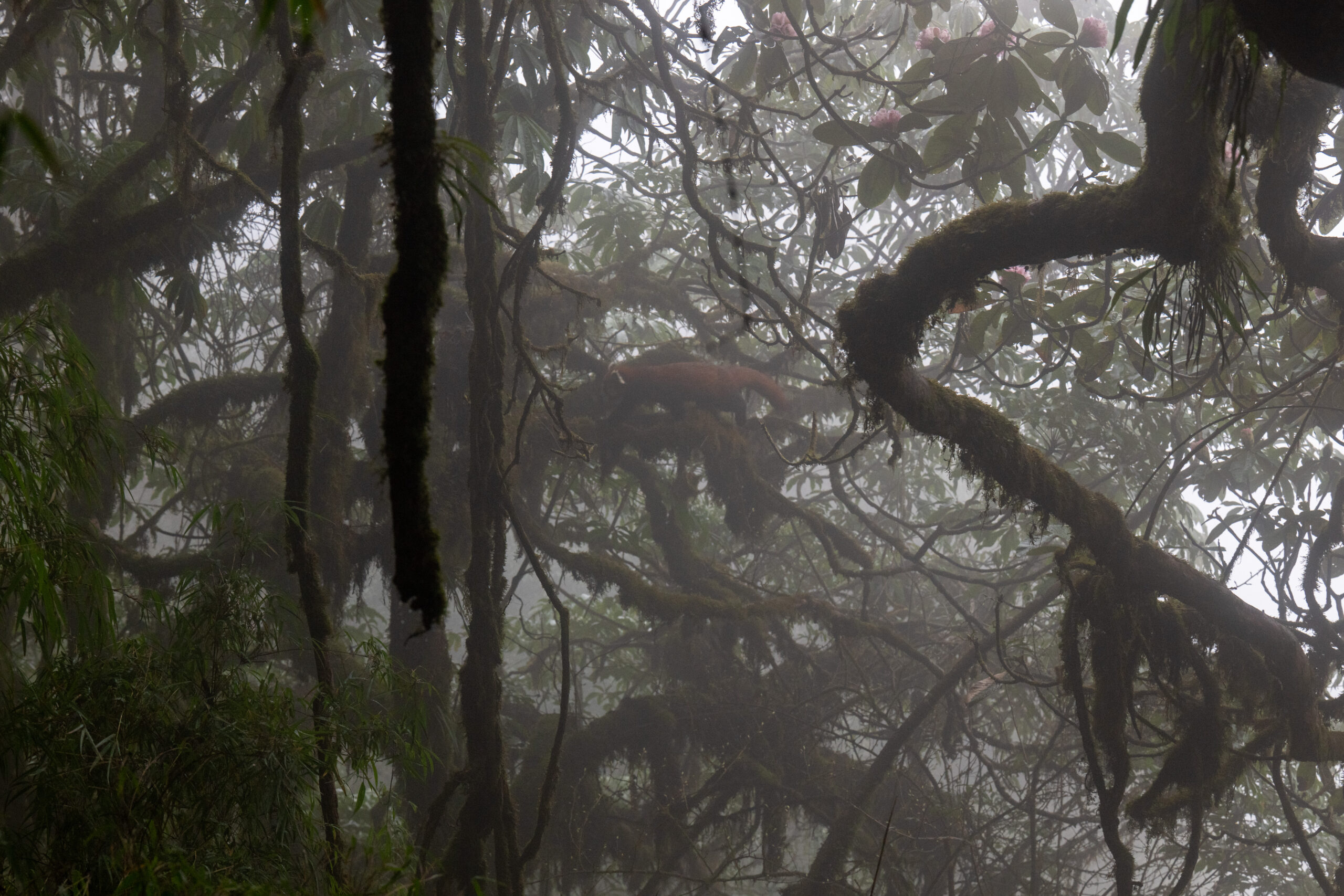
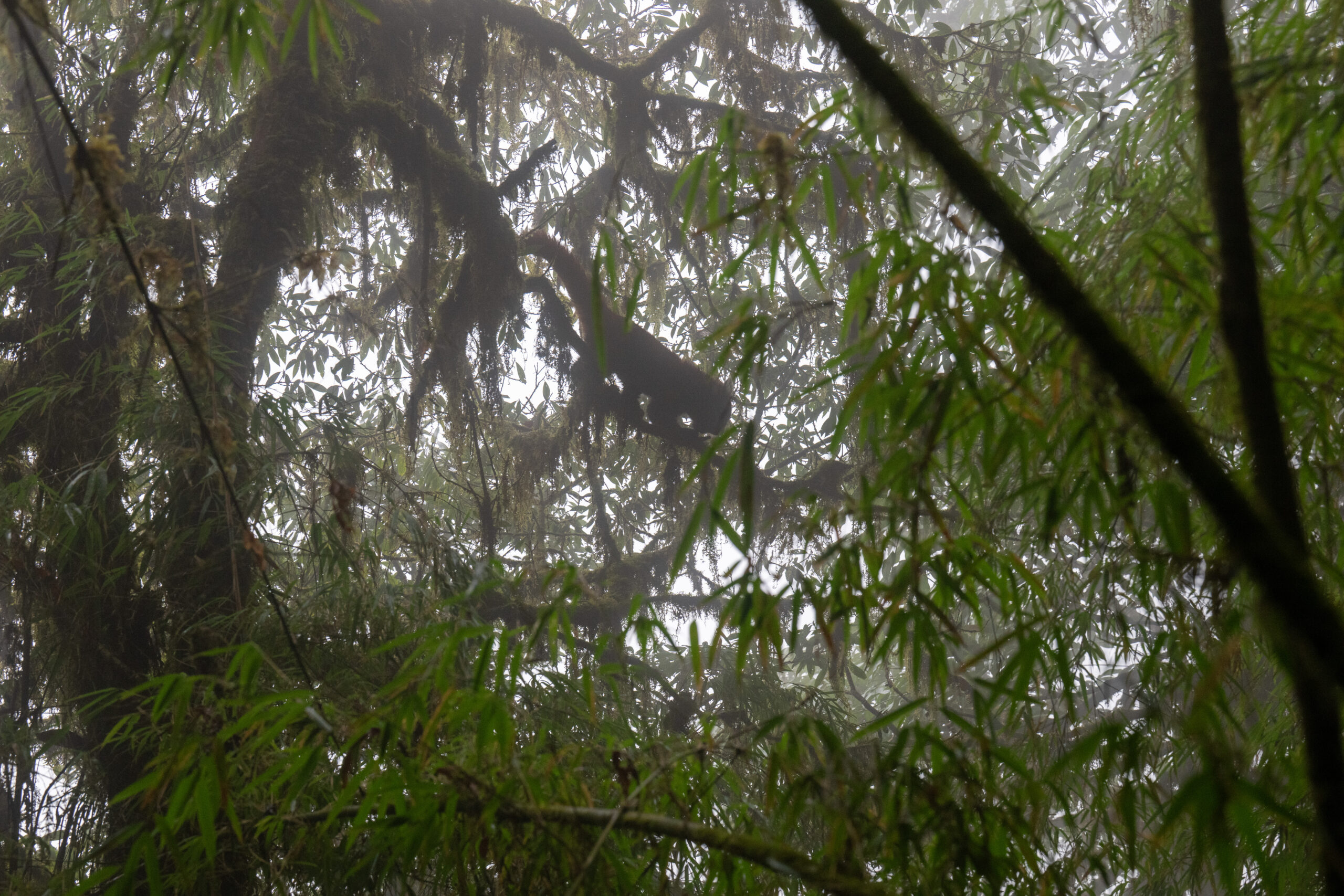
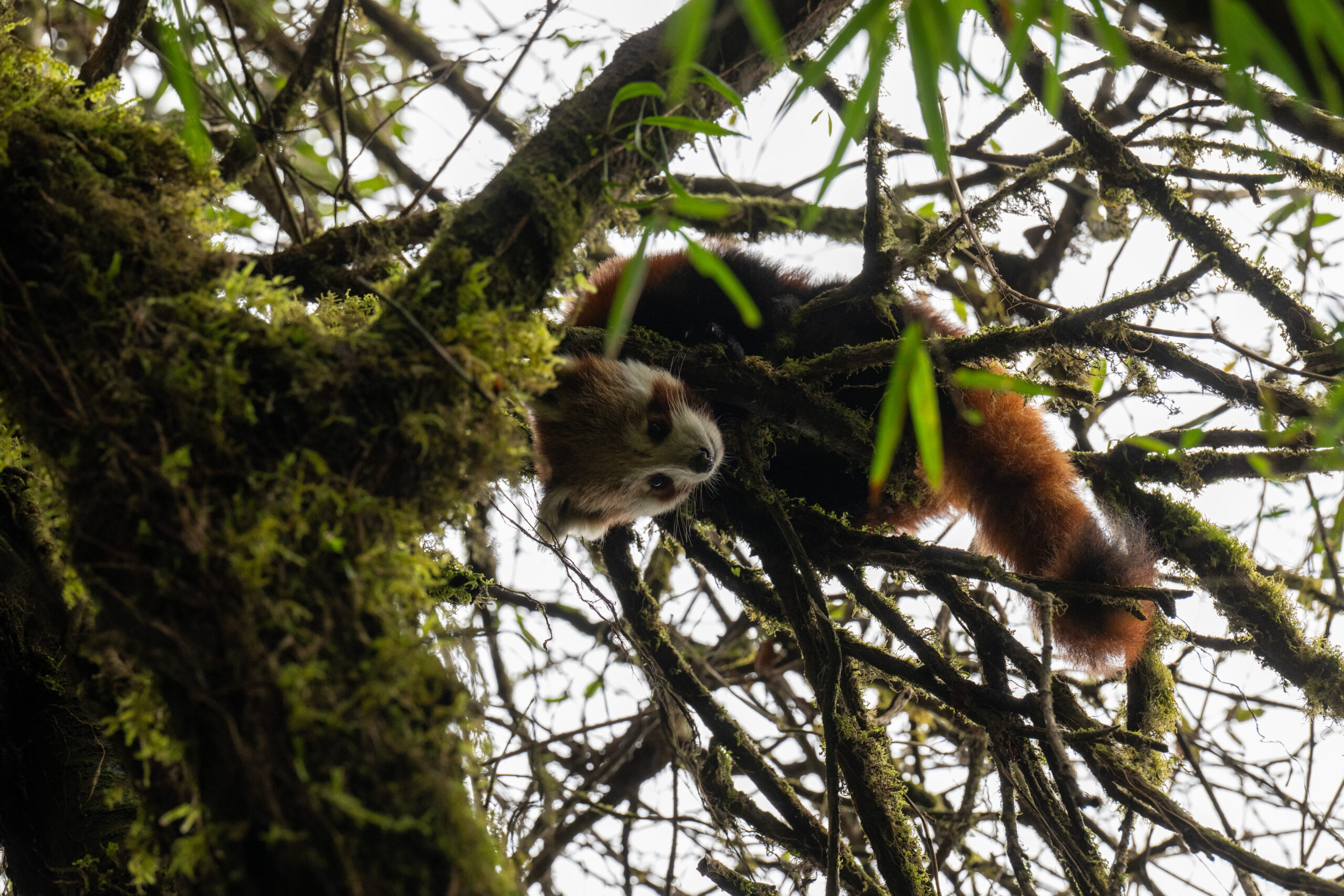
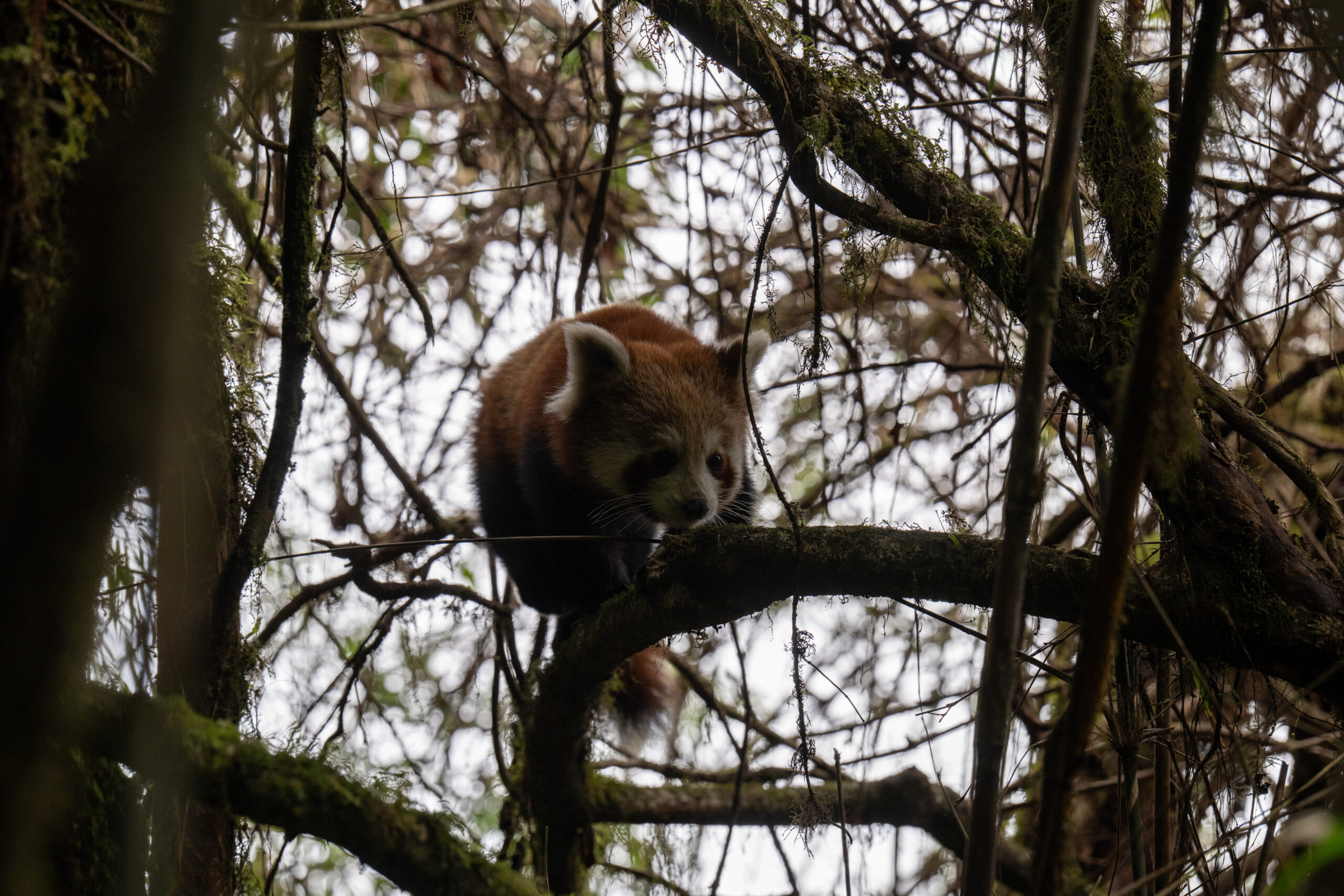

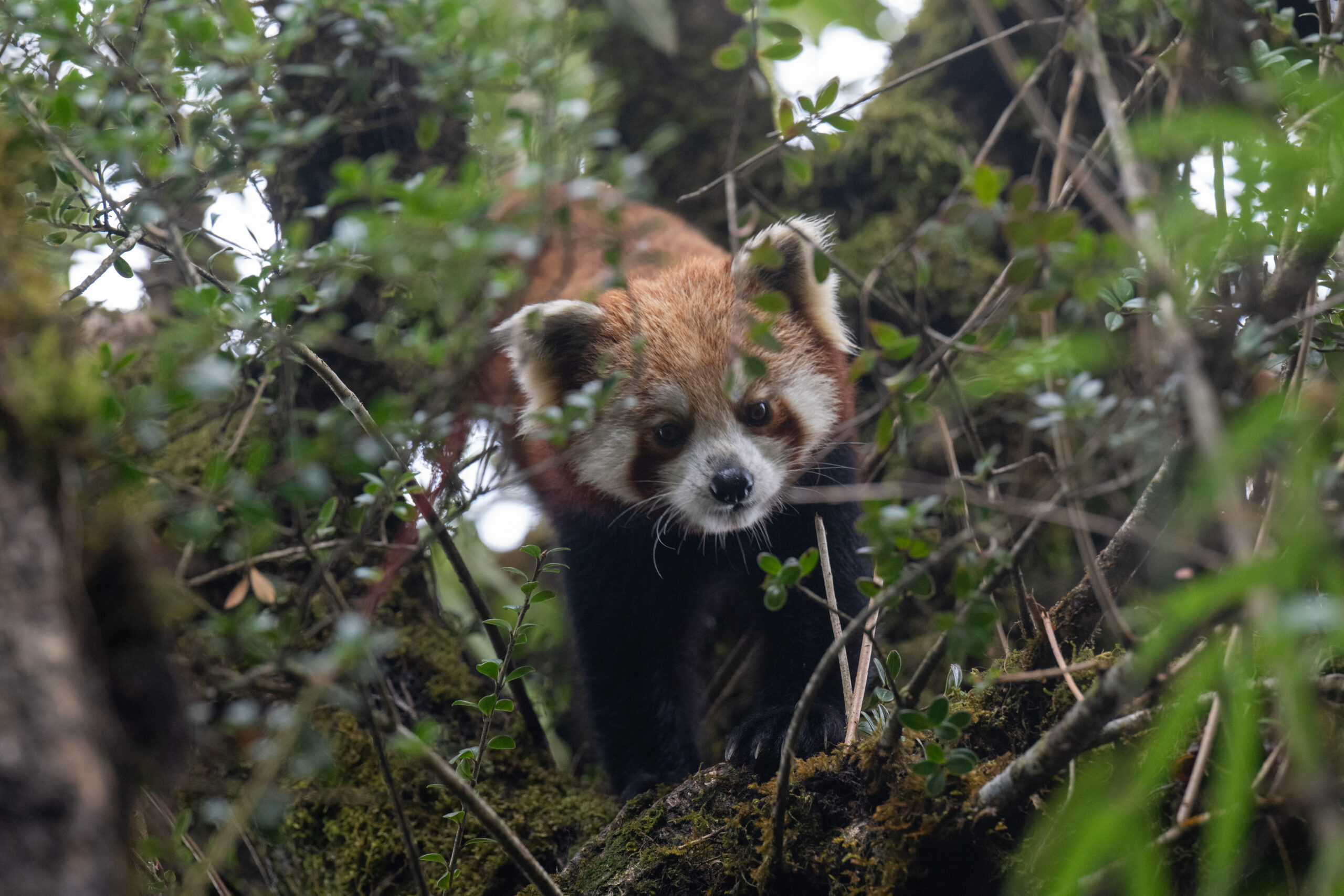
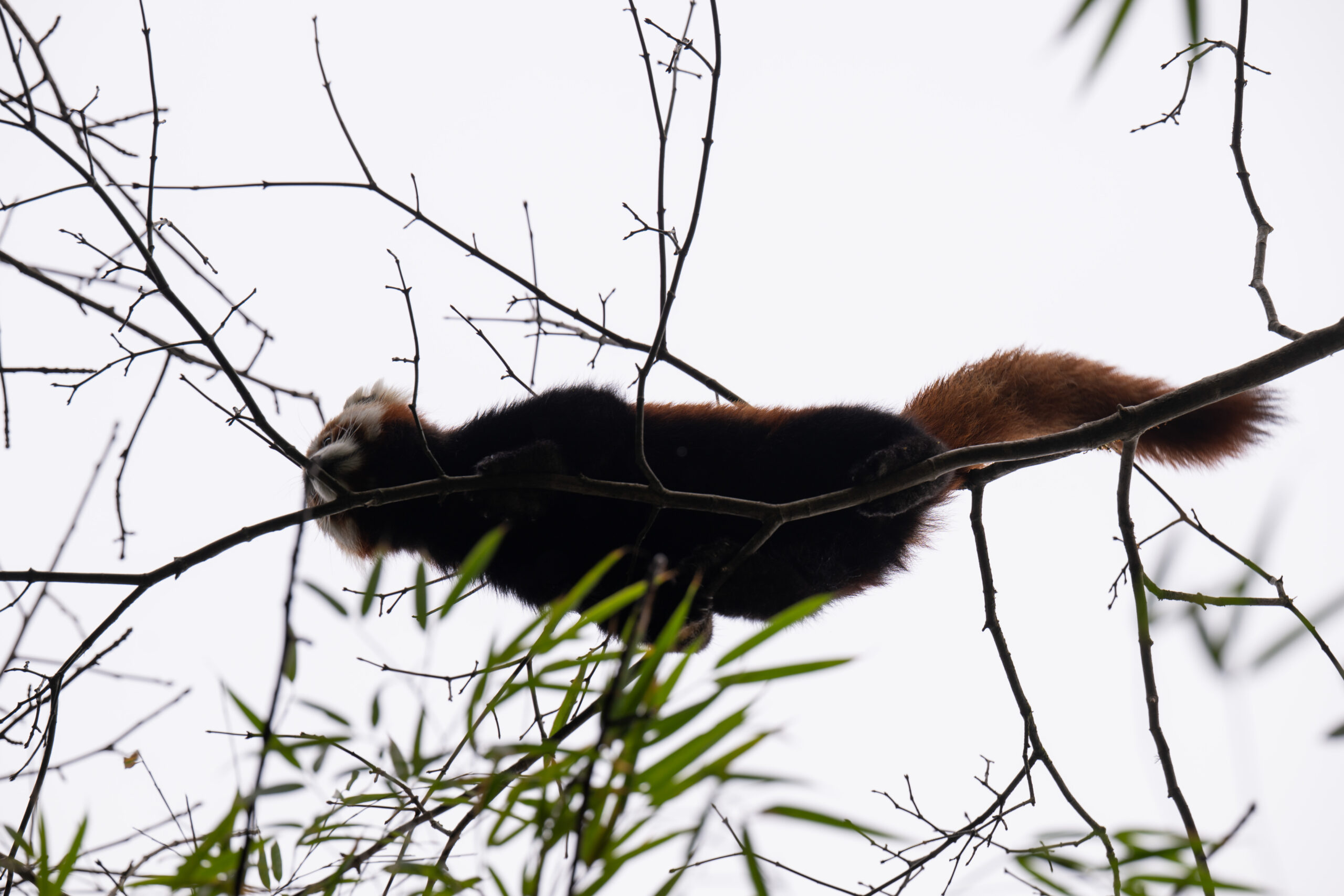
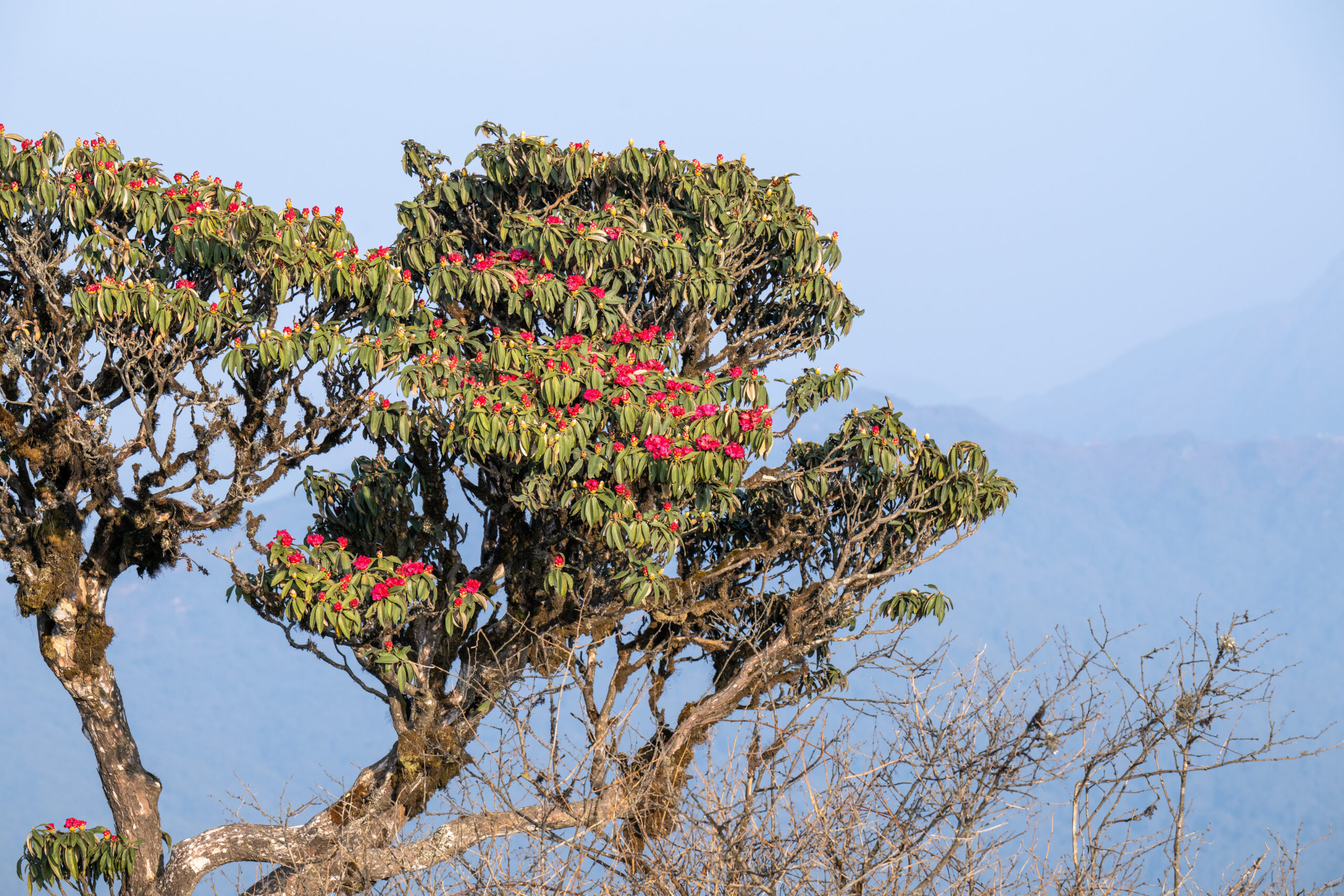
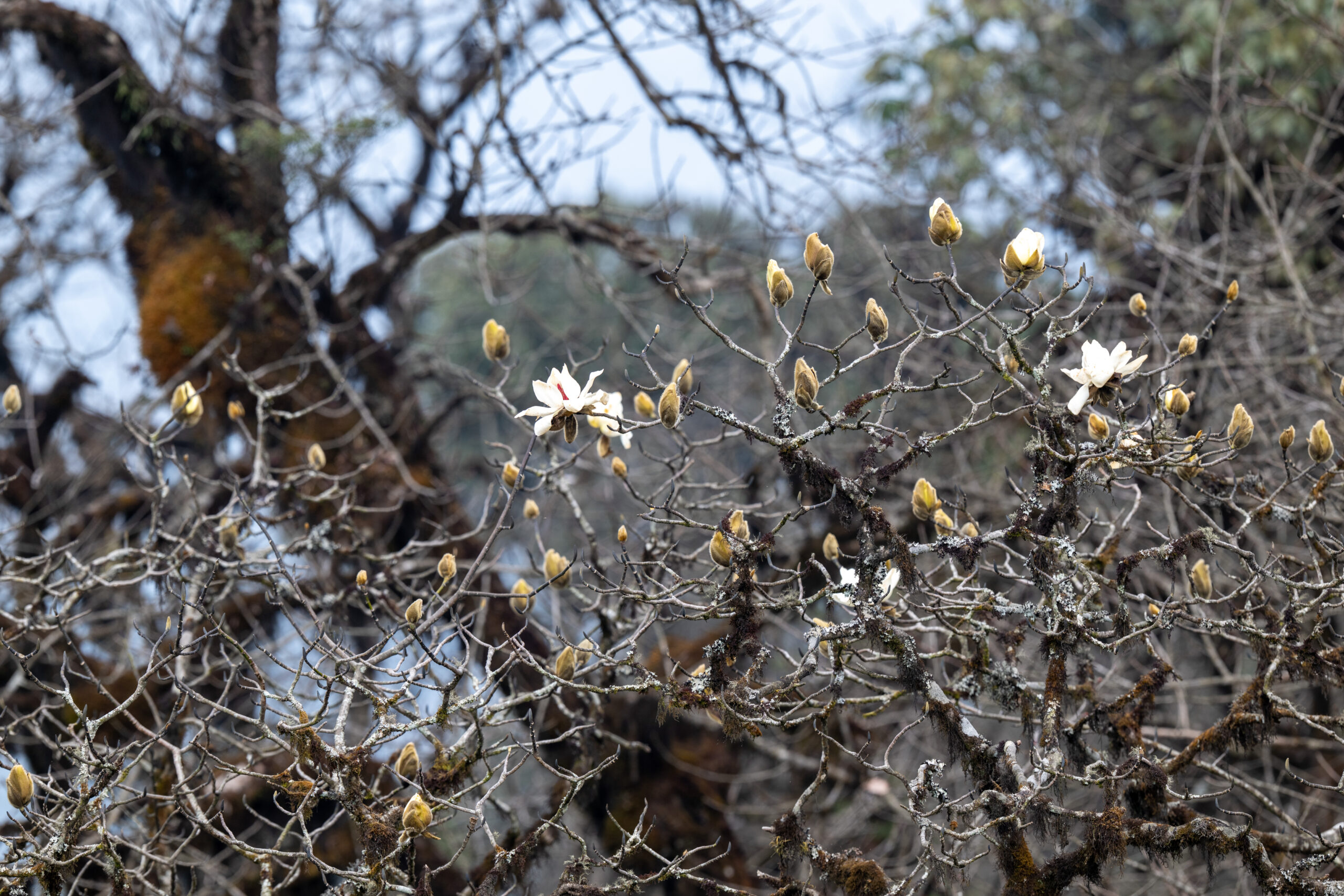
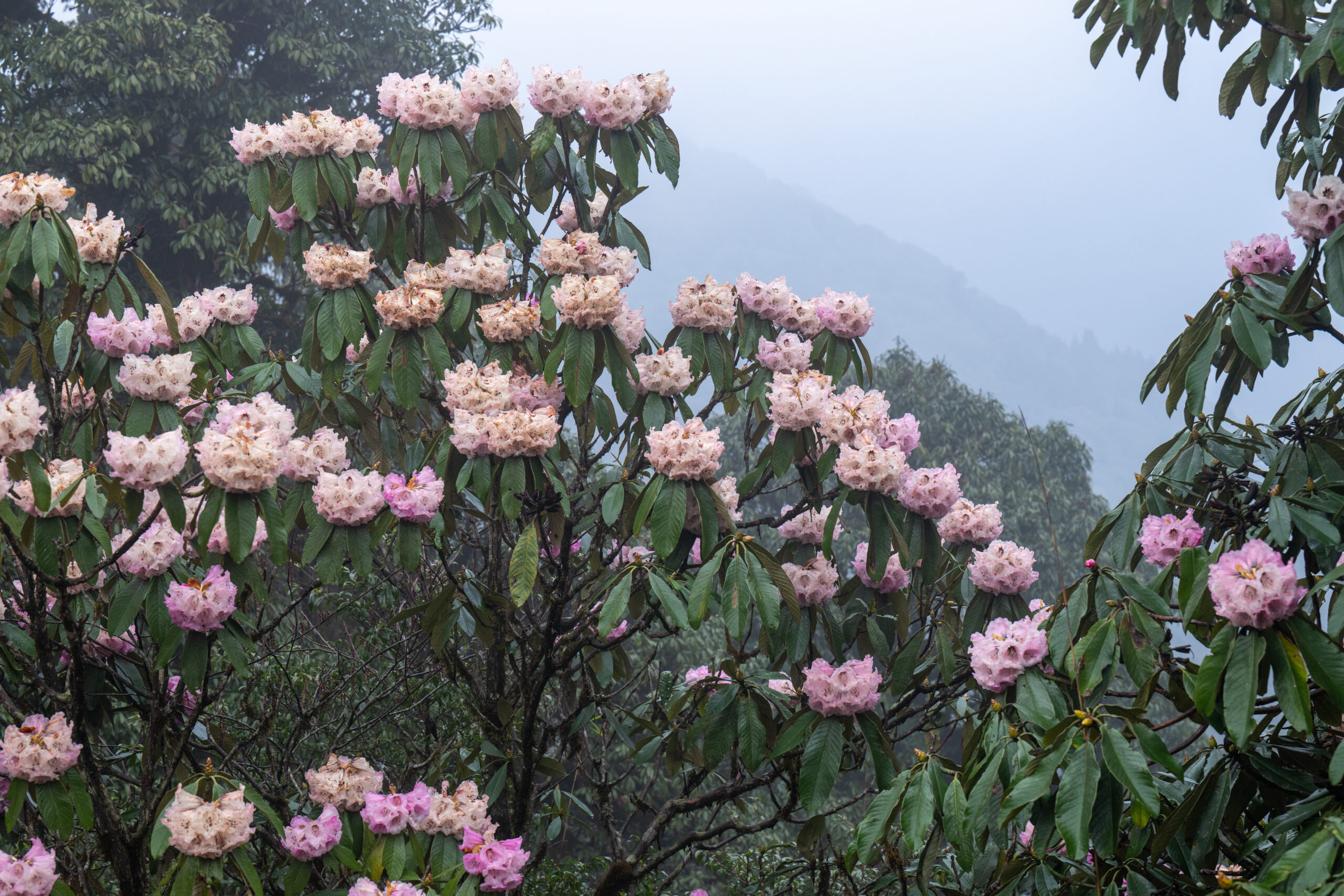
The dense forest is magical though, in the mist, with rhododendron trees starting to bloom in the early spring, oak trees covered in moss and labyrinths of bamboo.


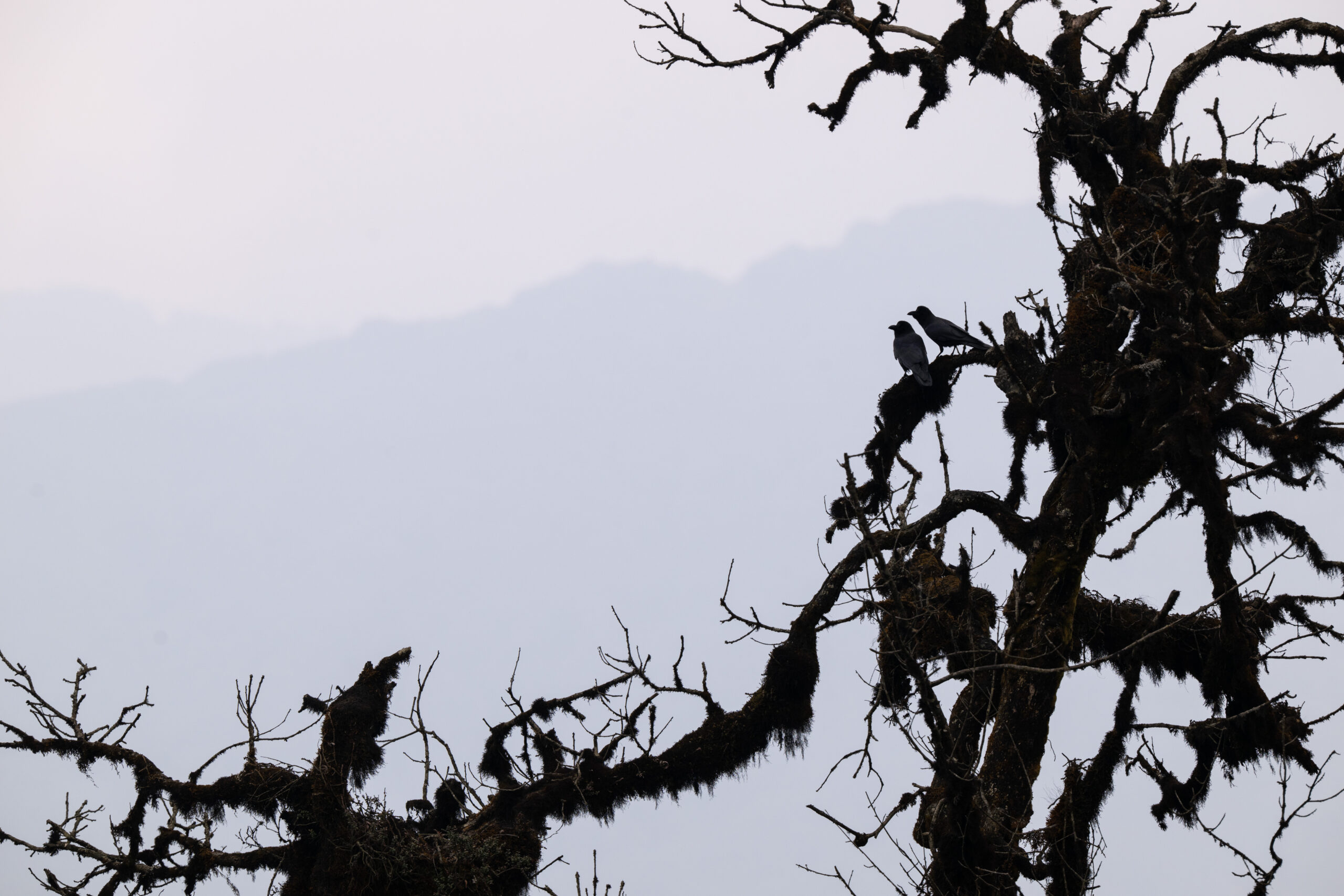


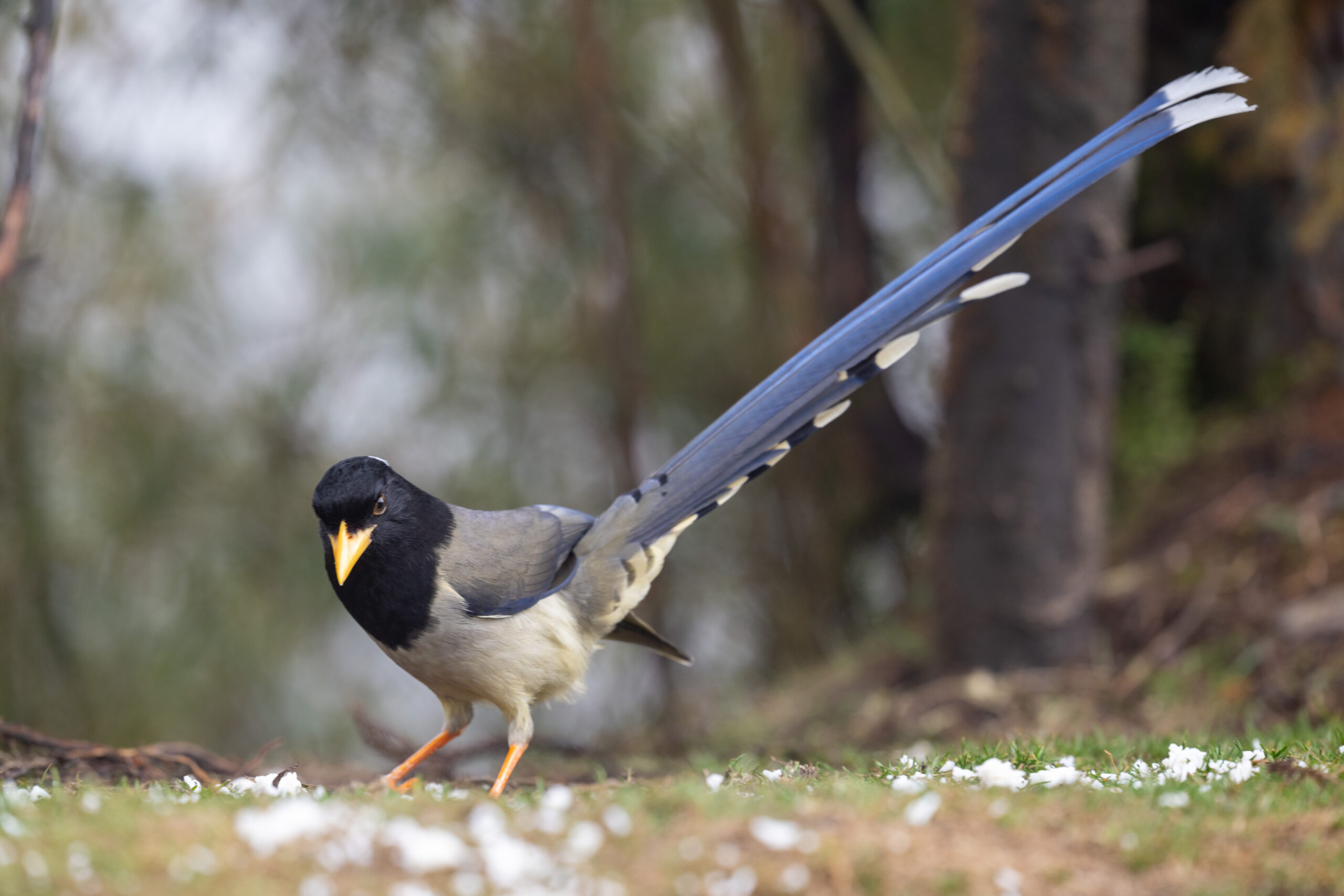
Then there was bird photography that was really nice. Some of them gathered around the house where we had lunch. Others were seen on the way to and from the national park. Sometimes it was way too dark and misty to get decent photos, but it was good fun trying.




The Perfect Moment
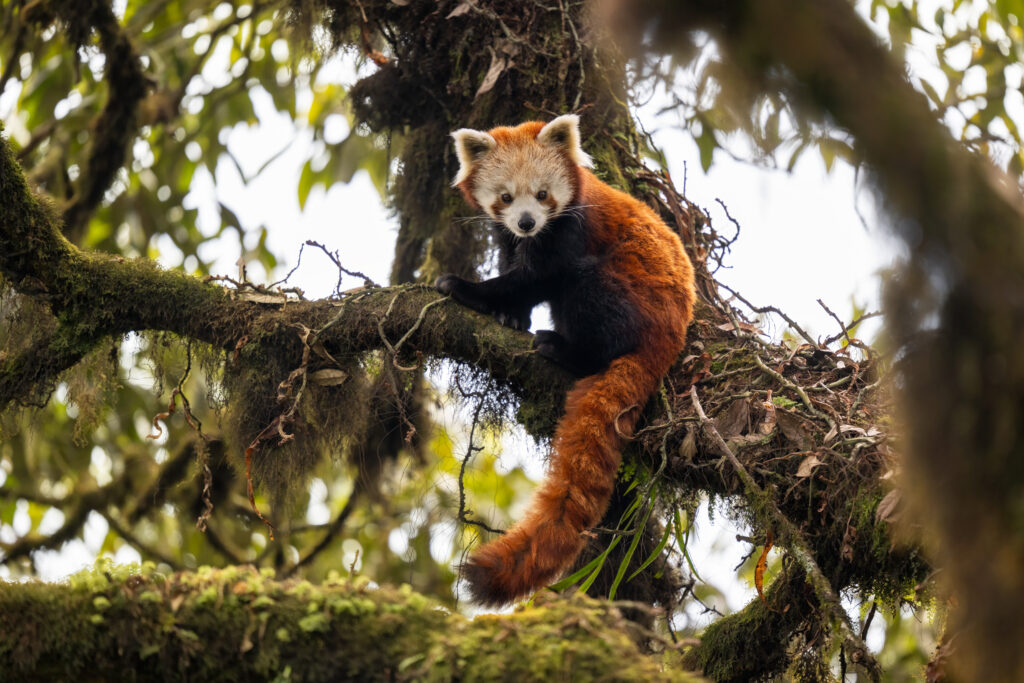
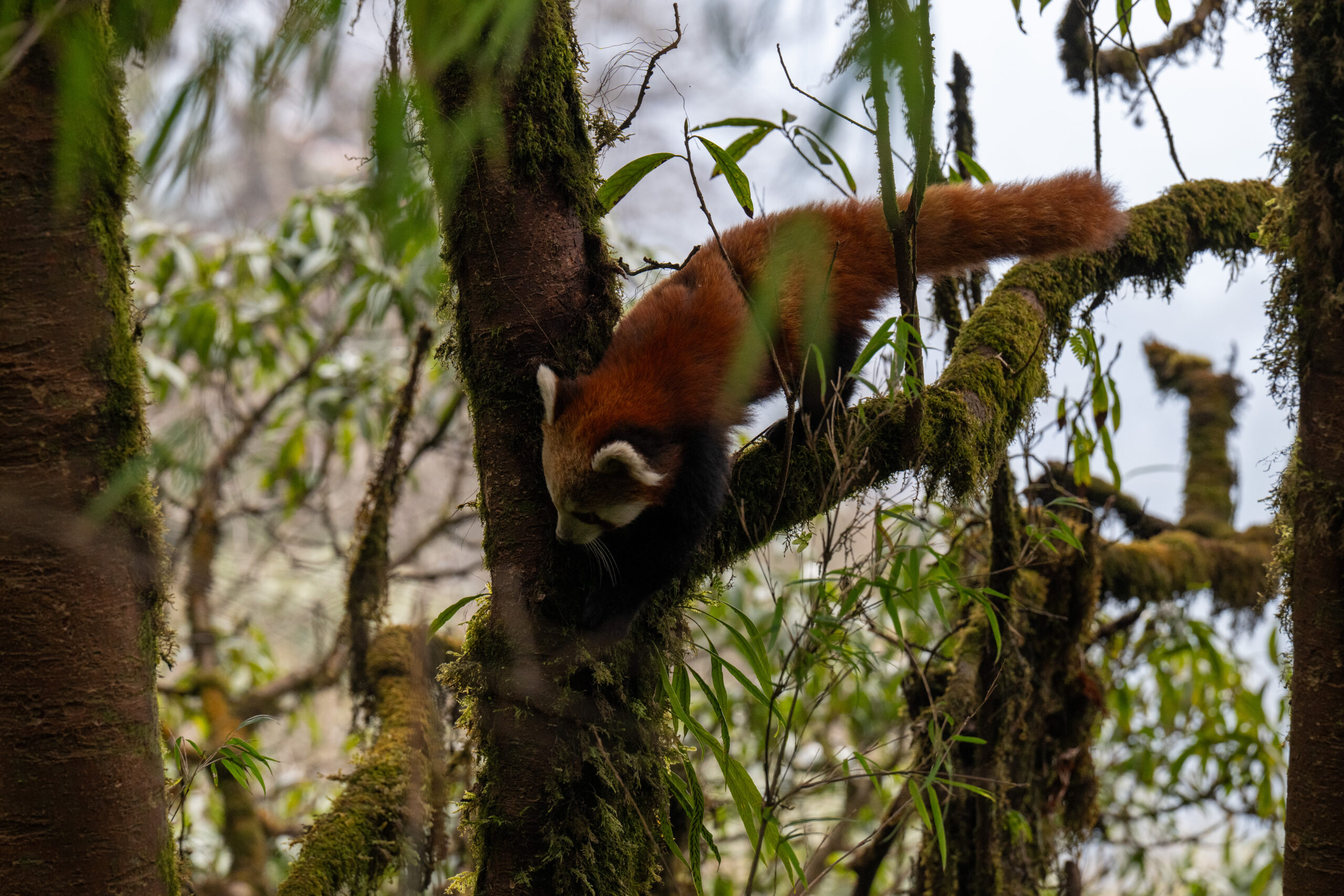
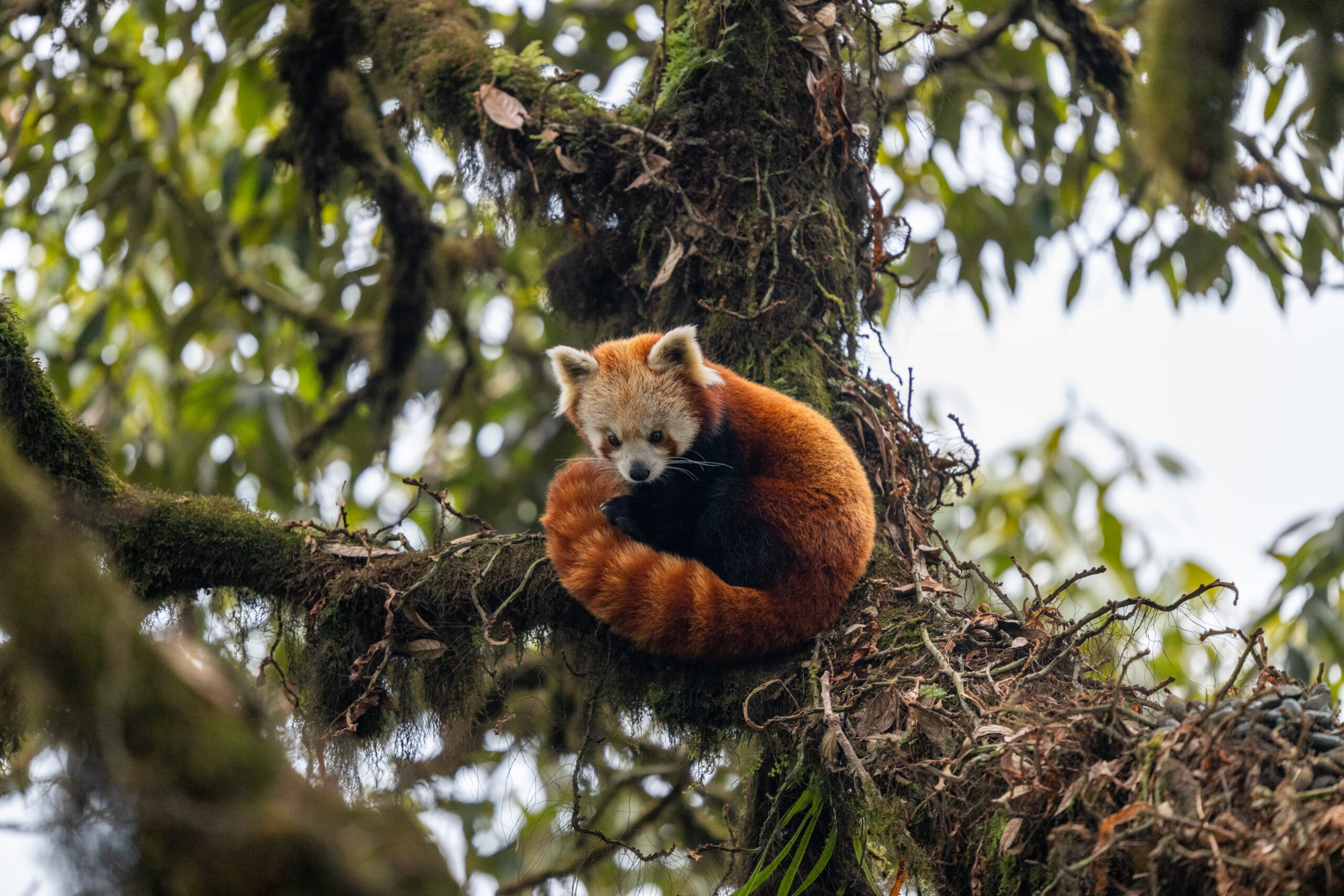
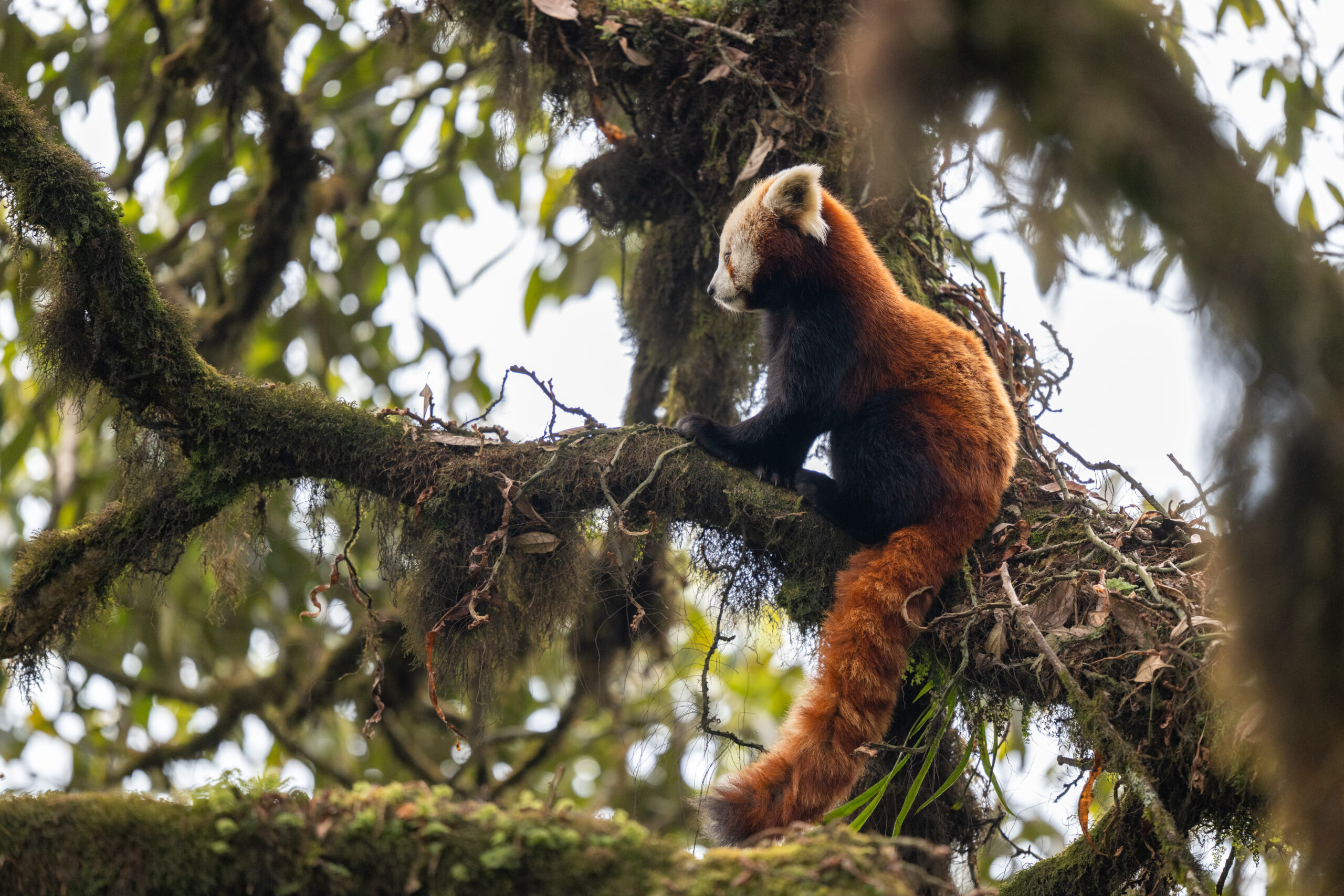
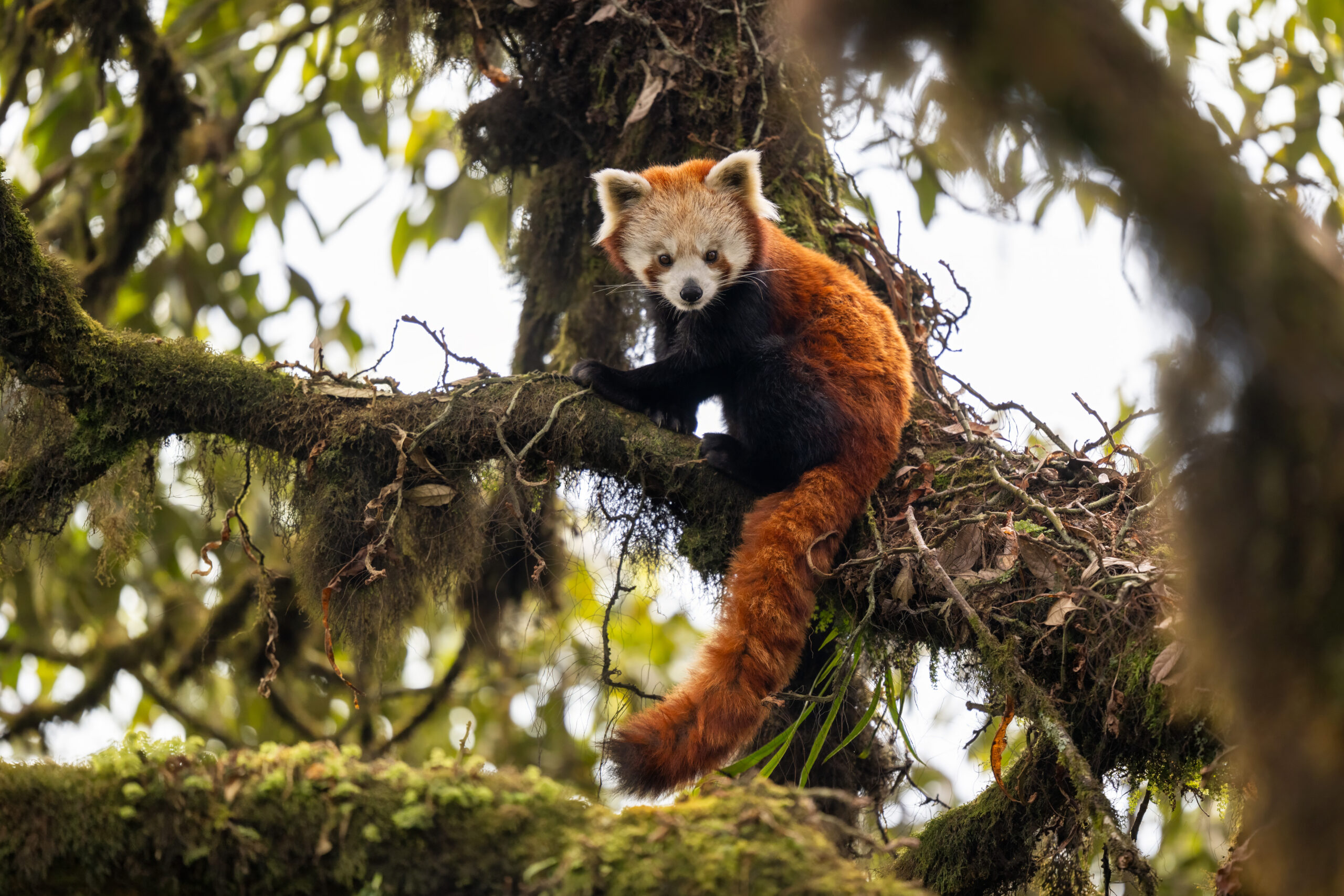
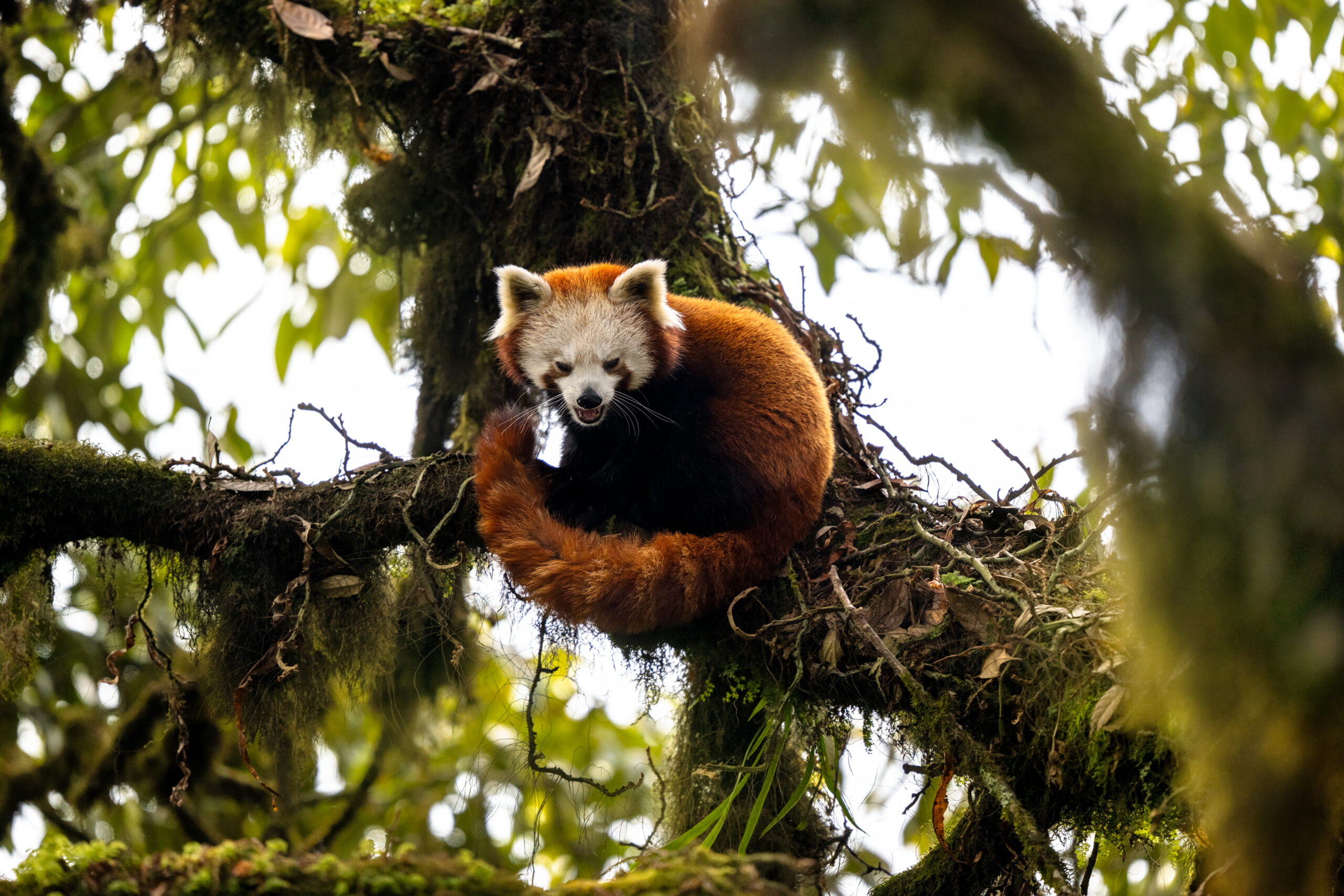
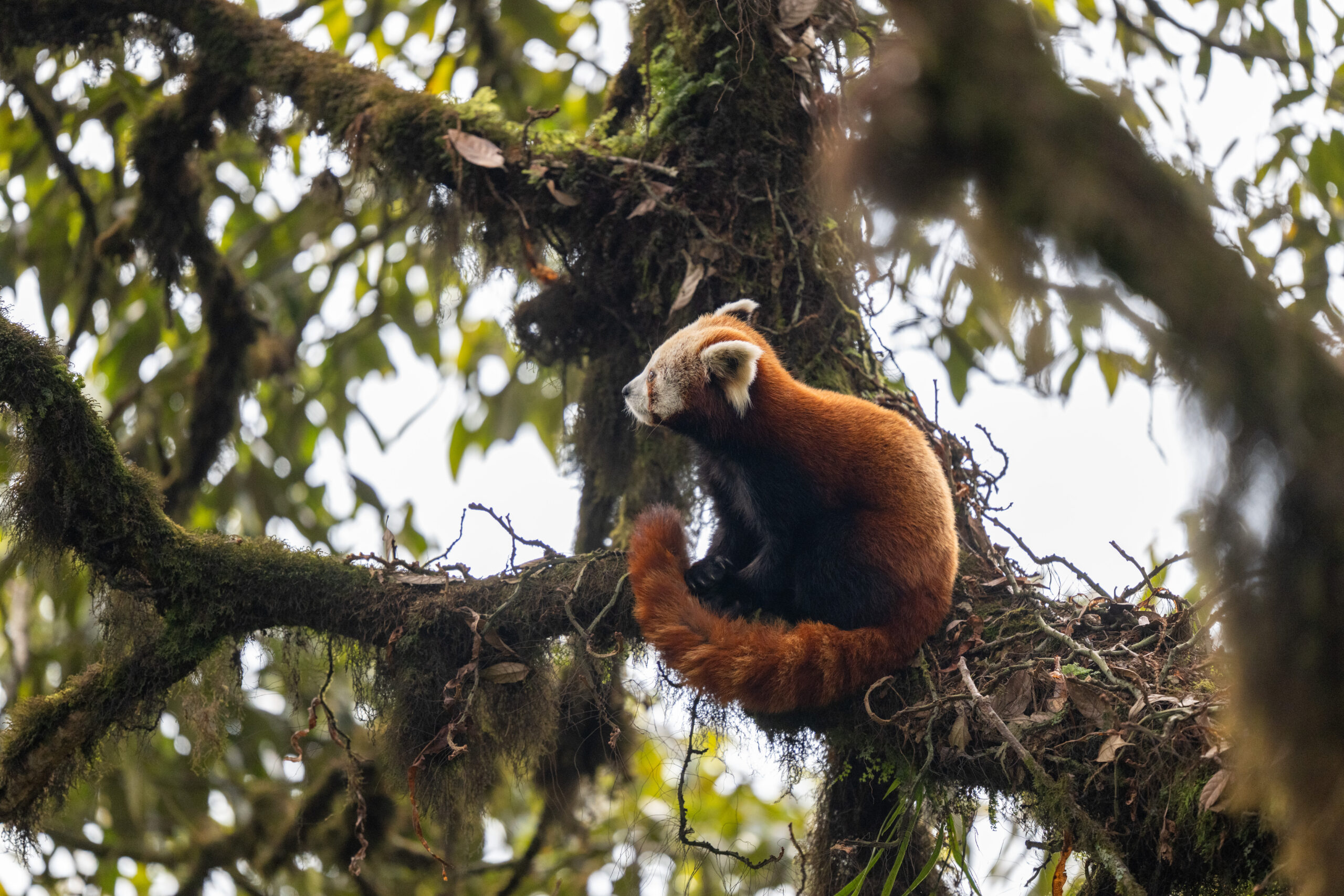
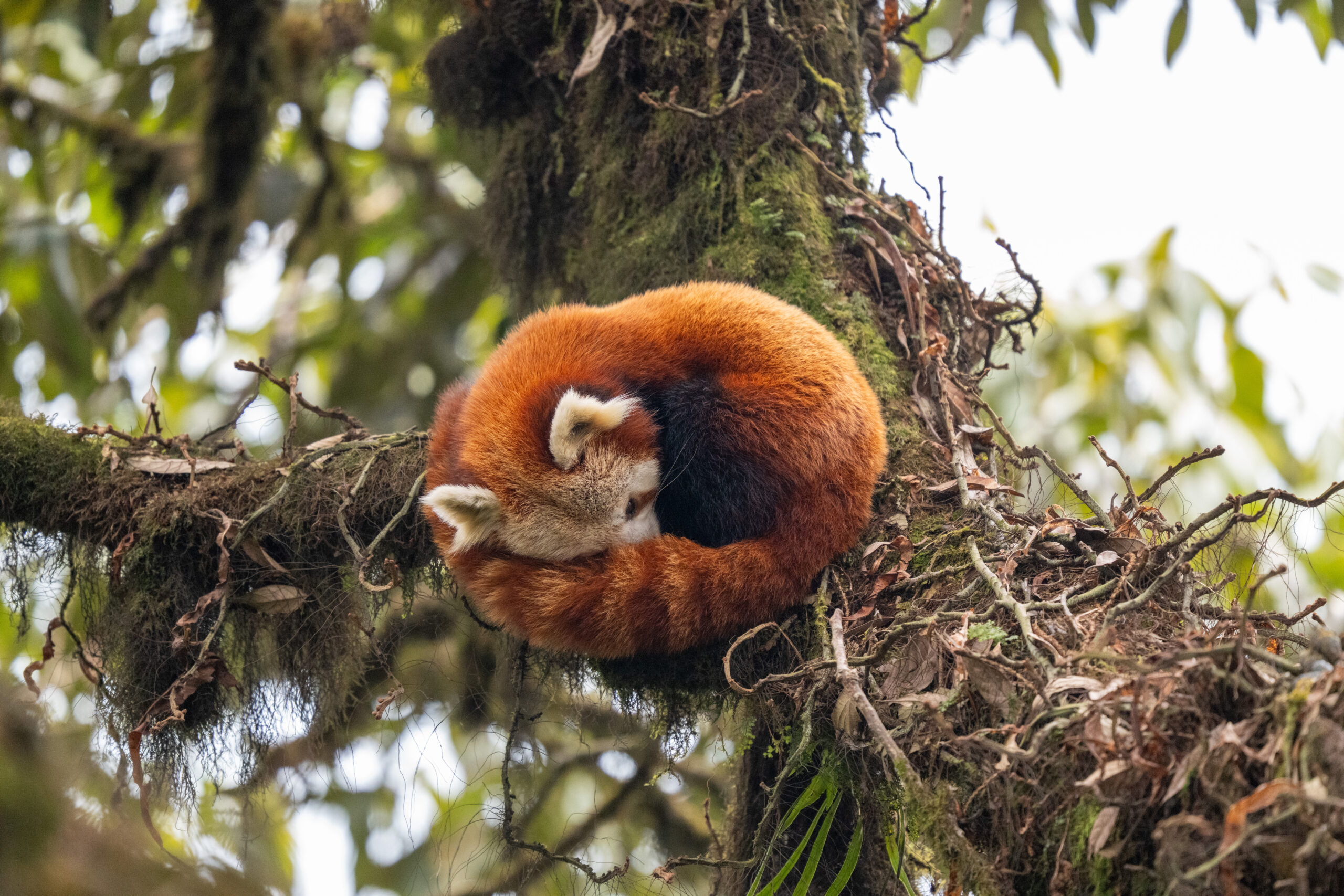
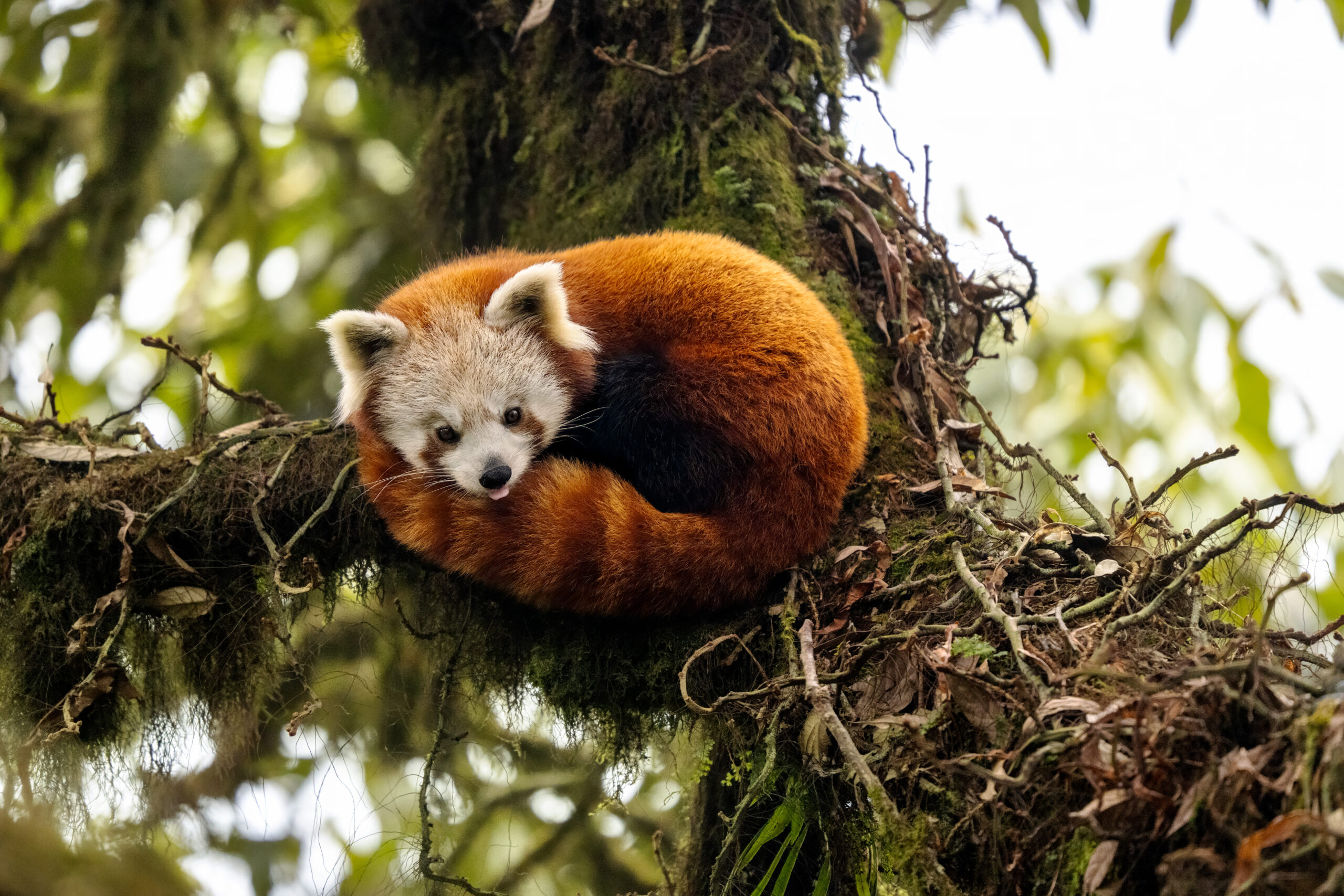
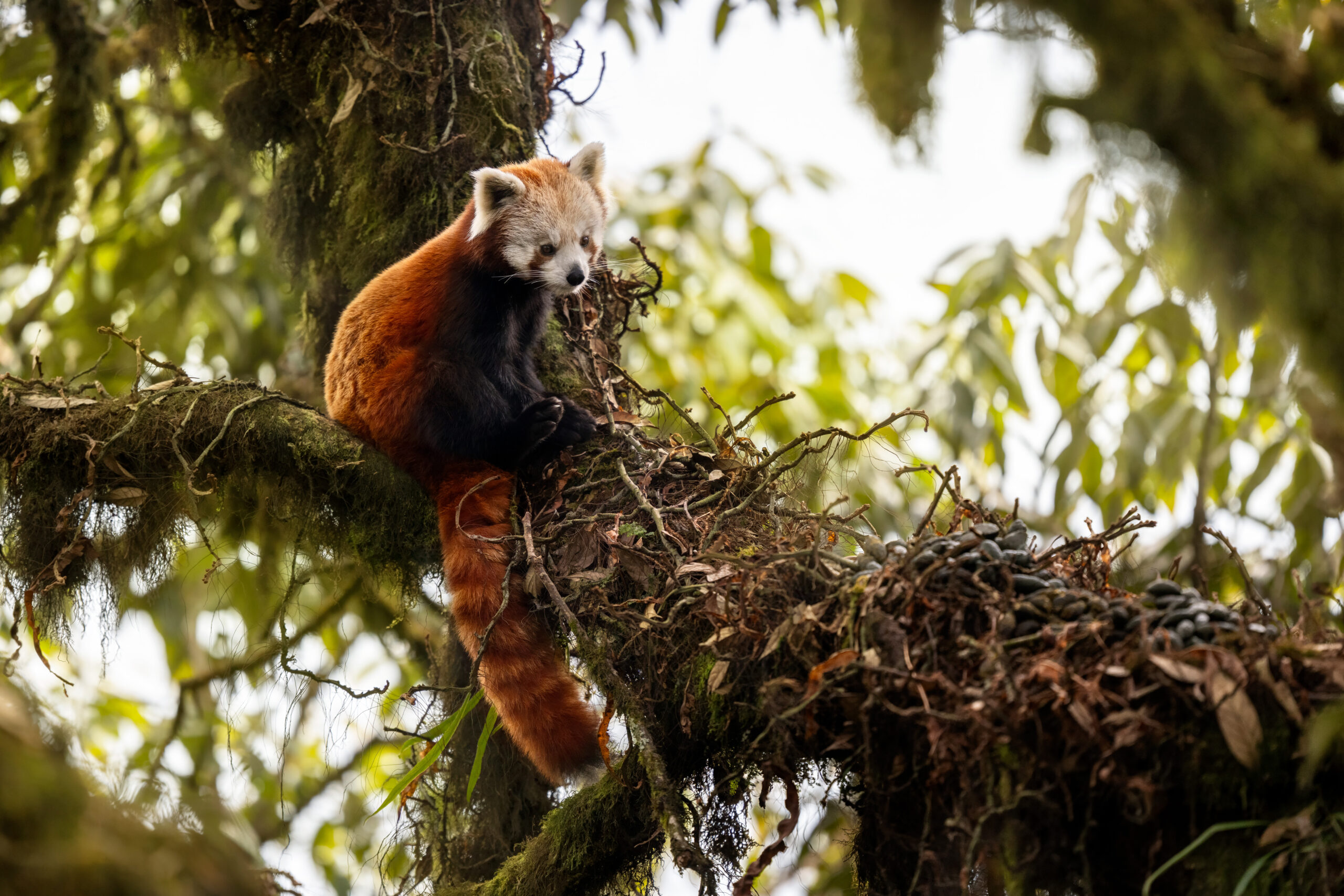
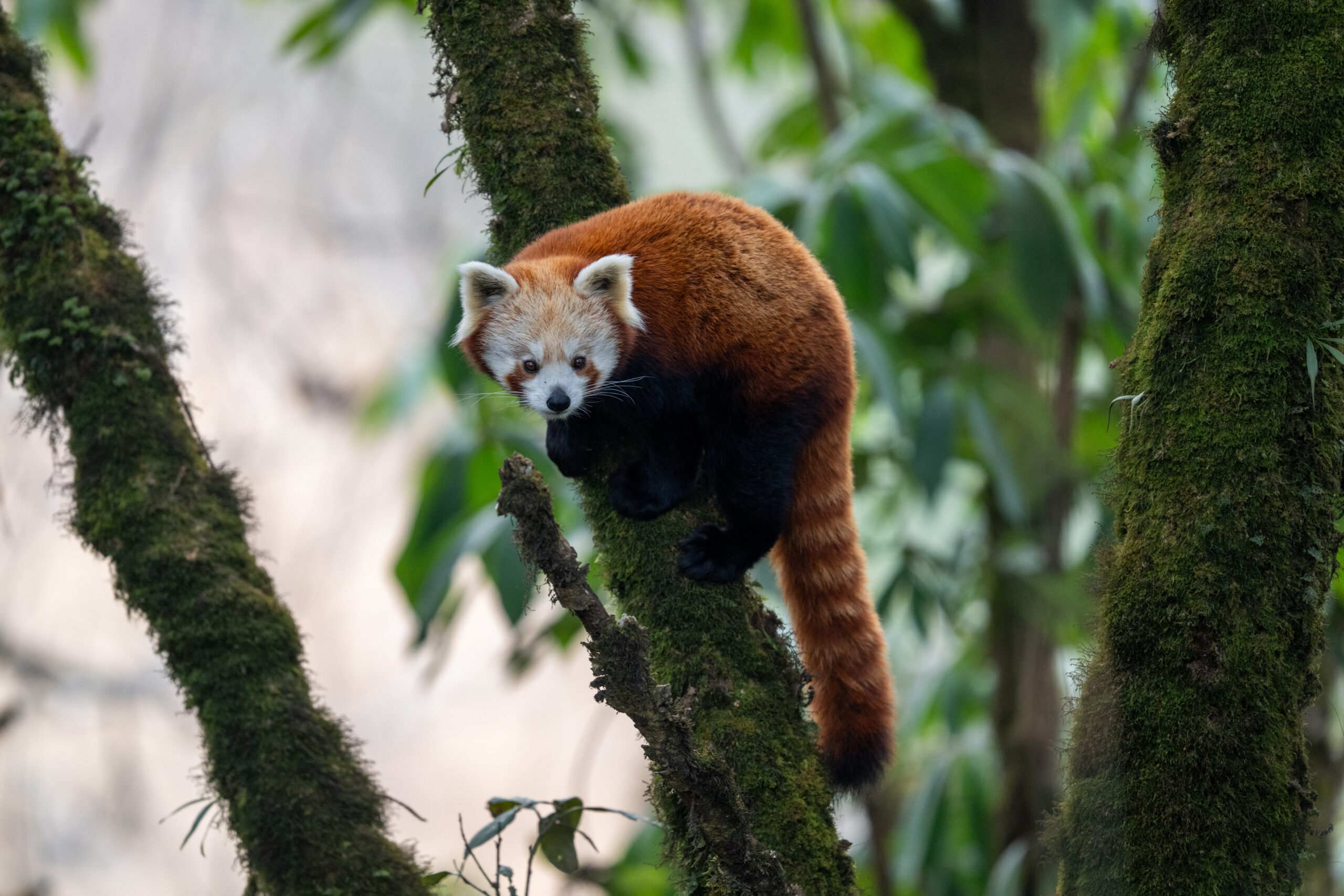
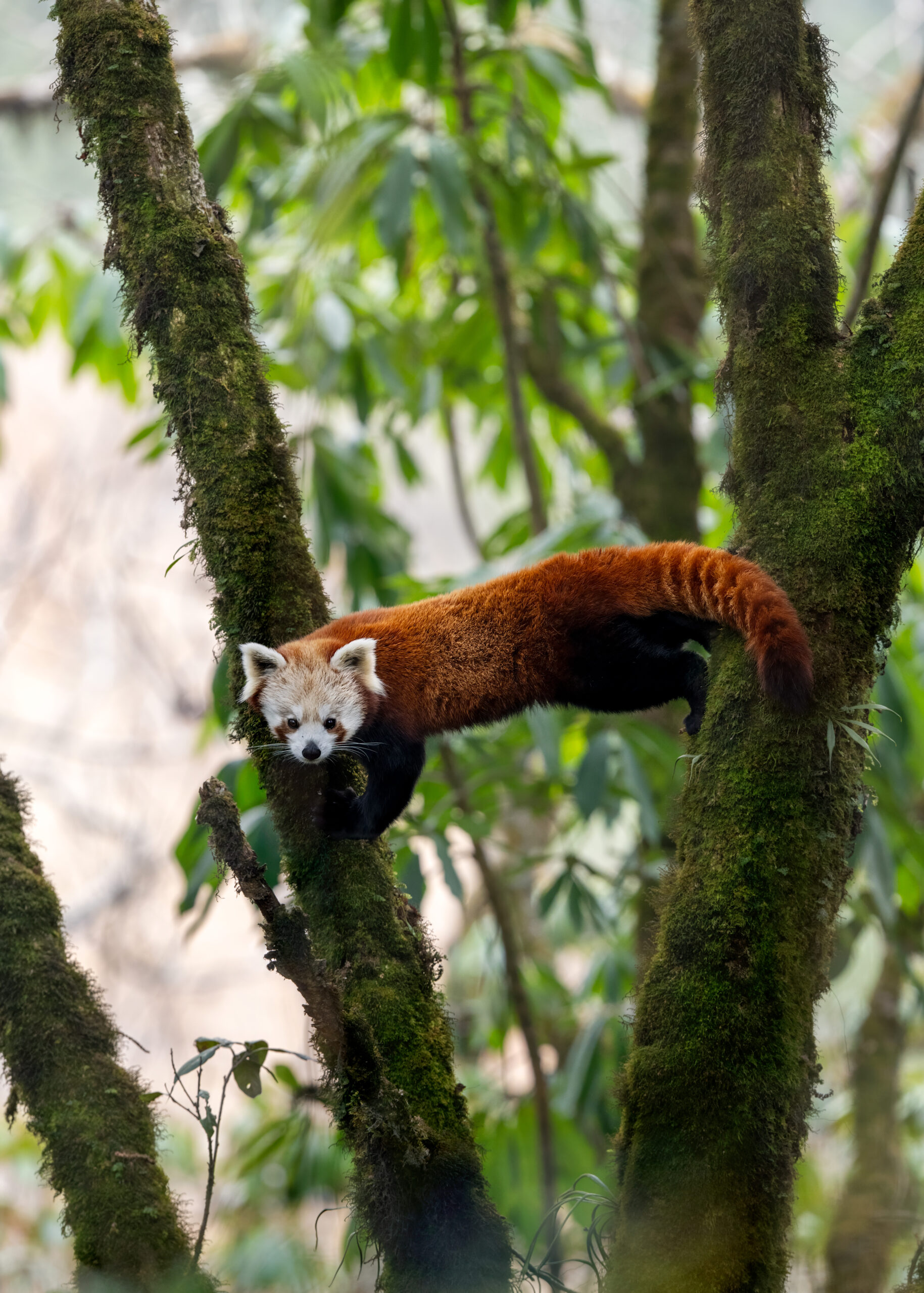
Then, finally, there was a perfect moment. That’s it! Day four was a bright morning, that started with a perfect sighting of a super-cute red panda relaxing on a big branch with clear sight. No bamboo or fog. Just a red panda in clear sight. Superb! It wasn’t light, but it was good enough for my 400 mm lens, and that was it—less than half an hour which gave me great photos of an elusive and iconic animal and a great sense of accomplishment to succed on this task. After that it got foggy, and the next day was just terribly misty, cold and rainy, so that was the end of it.
Here are photos of the lovely rad panda. As a side note, it actually has a toilet on the branch, which it used, and you can see the droppings on several of the pictures.
Getting to Singalila National Park
Getting to and from the national park took almost two hours from the town I stayed in called Manebhajan. It was around one kilometres ascent to climb up a bumpy road which the driver skillfully handled, starting really early every morning.
The spotters had already started looking when we arrived, and sometimes they had found a red panda, and otherwise we just relied on them to find something. We had to wait, had some tea or lunch, walked around in the forest, and just hoped for the best, waiting for a call and then hurry up to try to see it. The only time I was there finding one was when I followed a red panda that the spotters had sighted, and it just happened, to its own and all our surprise, to meet another red panda sitting on a branch in the deep forest.


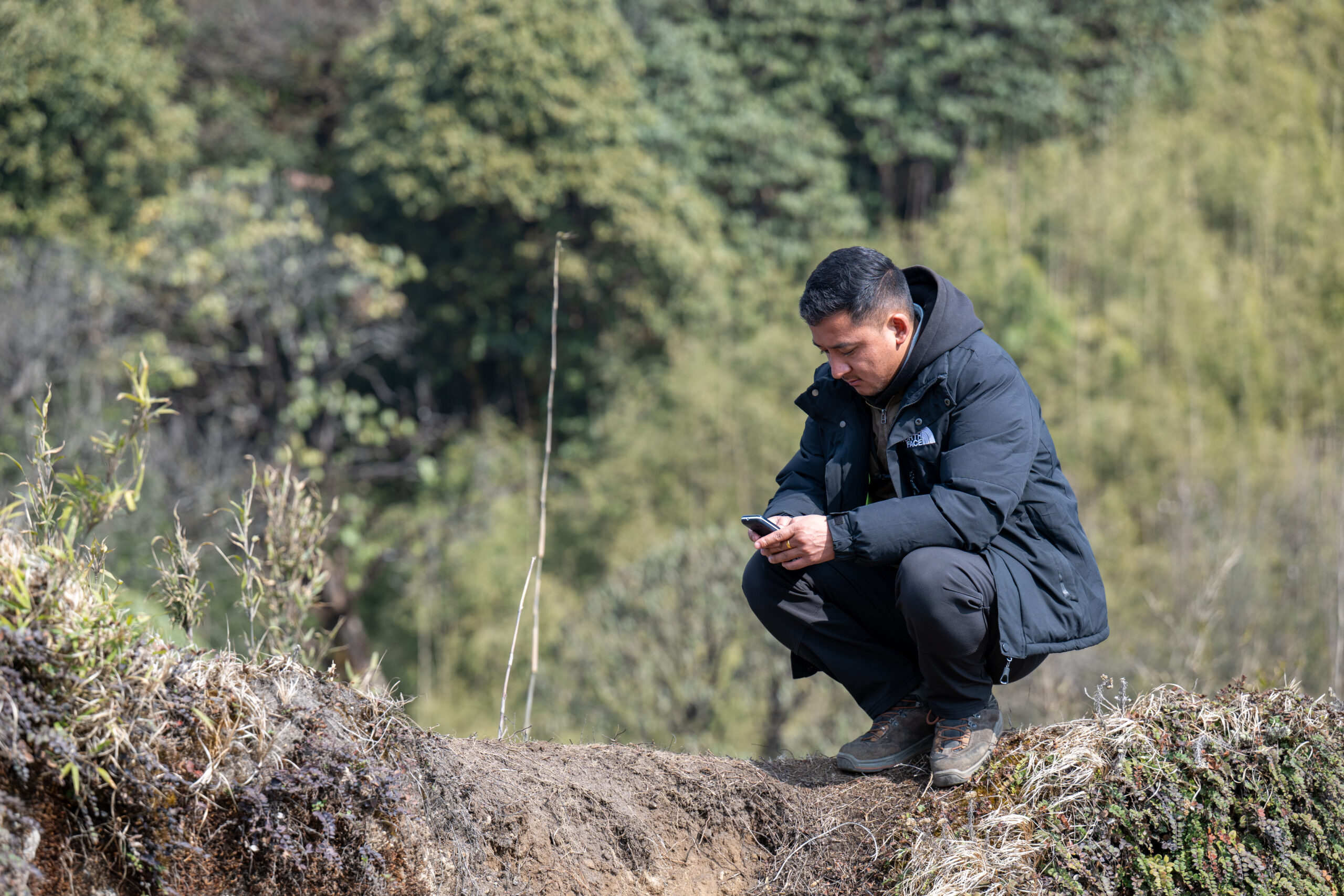


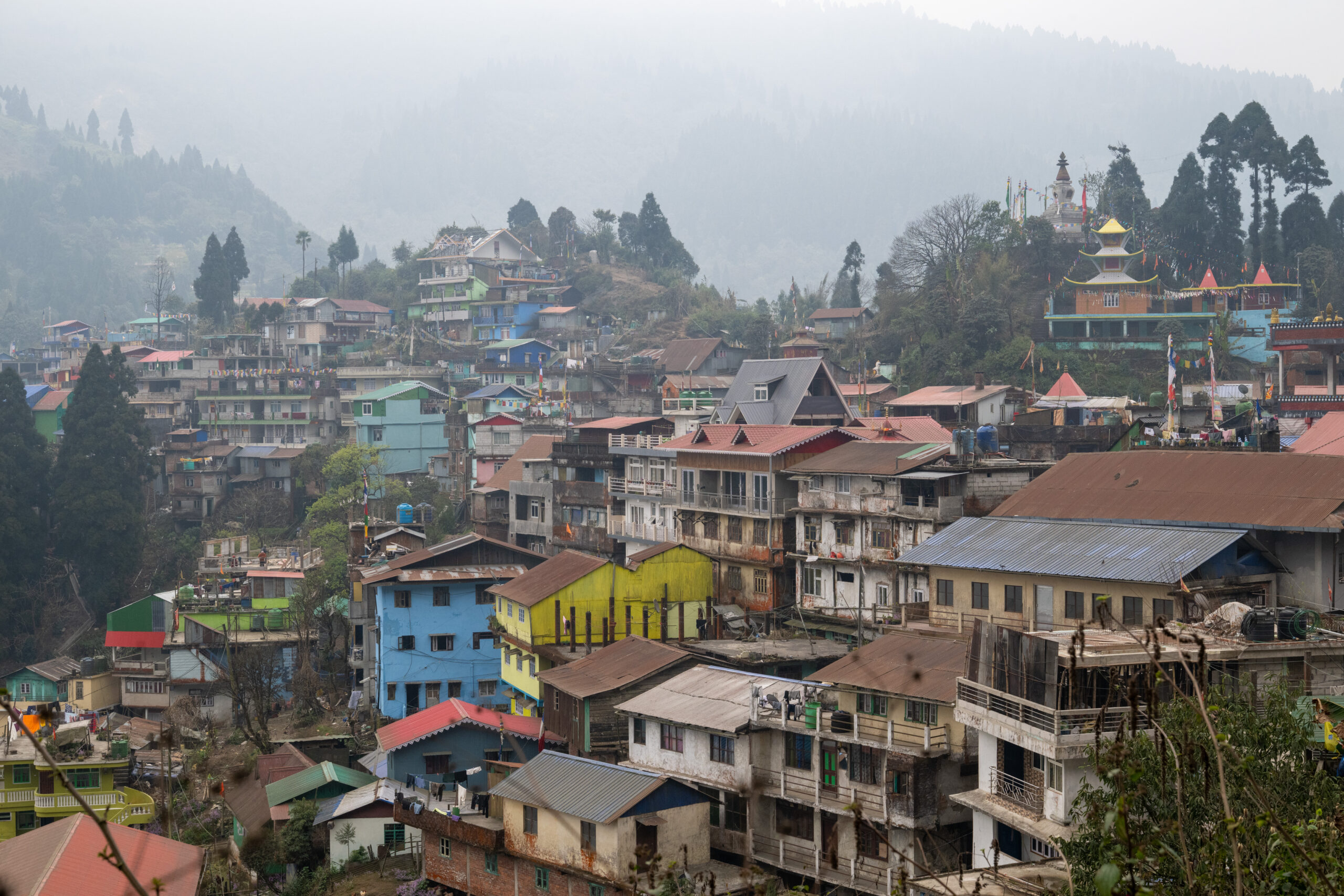
I flew from Delhi to Bagdogra, where Sourav Mondal from Firefox Expeditions picked me up at the airport for another two hours by car to Manebhanjan. Manebhanjan is on the border with Nepal and was my base for the day trips along steep roads into the national park. I stayed at a lovely homestay and had a little time to walk around this town, which was quite nice in its way. Sourav also arranged a trip to try to see flying squirrels in a nearby forest on my last evening, but I never got a decent photo in the darkness and light mist, although I saw one high up in a tree, so that was nice.
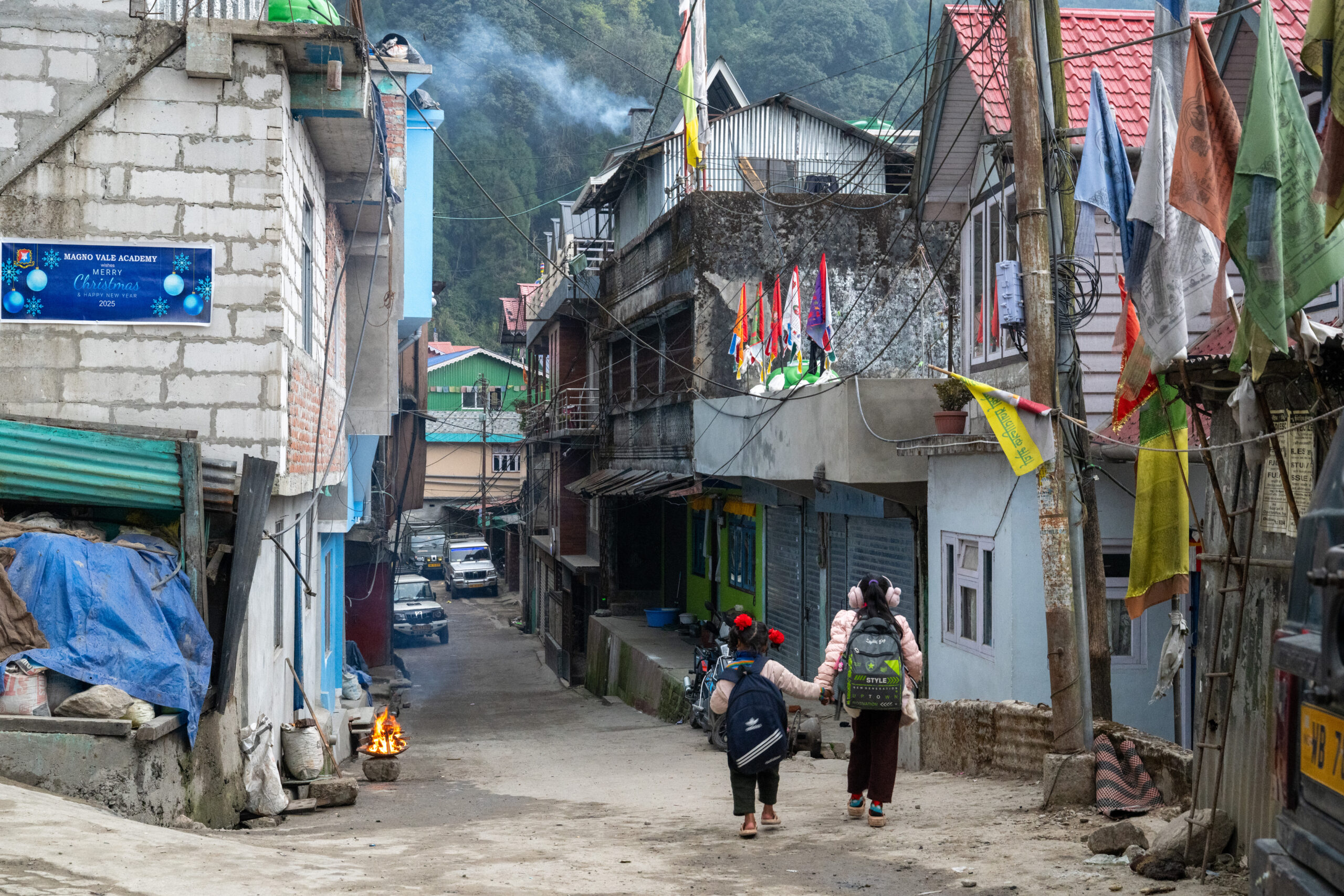
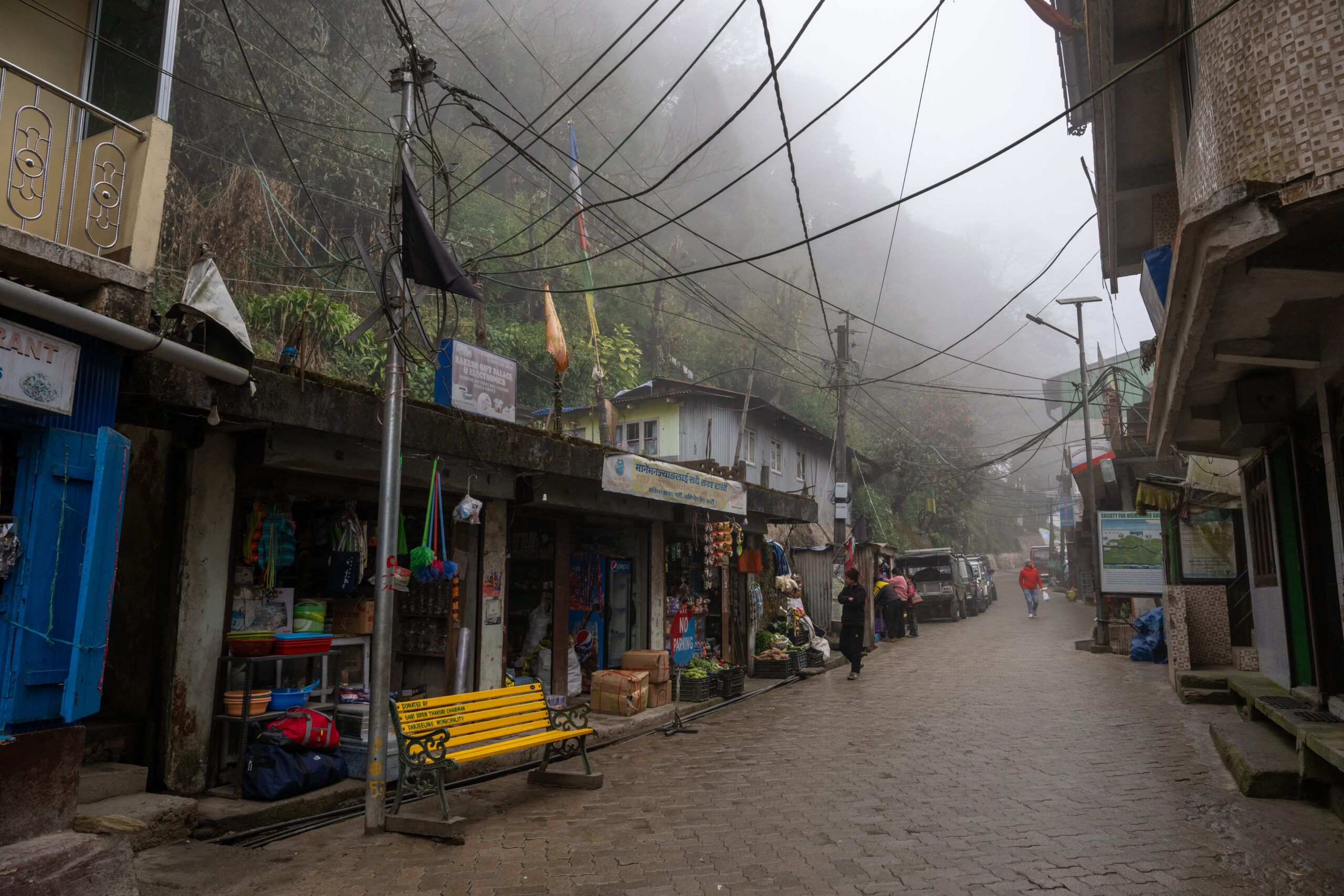
Along the road there were